



Your tires work harder than almost any other part of your vehicle. They support thousands of pounds of weight, transfer braking and steering forces to the road, and provide the traction you rely on in changing weather. Following practical Spring Lake Park MN tire care tips helps you drive with greater confidence while extending the life of your tires.
Drivers in Spring Lake Park experience a wide range of road conditions throughout the year. August often brings warm pavement, afternoon thunderstorms, construction zones, and increased highway travel before the school season begins. These conditions can place additional stress on tires that are already worn or improperly maintained.
As experienced technicians know, many tire-related problems develop gradually. A tire that is only slightly underinflated today may wear unevenly over the next several months, reducing fuel economy and shortening its lifespan. Routine maintenance is much less expensive than replacing tires prematurely or dealing with a roadside emergency.
At Heartland Tire & Auto Centers, helping local drivers stay safe starts with educating them about proper tire care. Understanding what to inspect and when to schedule service can make a meaningful difference in both vehicle performance and overall road safety.
TL;DR: Spring Lake Park MN Tire Care Tips for Safer Driving
- Check your tire pressure at least once a month and always before a long drive.
- Inspect your tires regularly for uneven wear, cracks, punctures, and low tread depth.
- Rotate your tires according to your vehicle manufacturer’s recommended interval to promote even wear.
- Prepare your tires for Minnesota’s changing seasons, including the hot days of August and the cooler temperatures that follow.
- Schedule routine inspections with experienced professionals to catch small tire problems before they become expensive repairs.
Why Tire Maintenance Matters More During Minnesota’s Weather
Late summer is one of the busiest driving seasons across Minnesota. Families take final vacations before school begins, commuters spend more time on the highway, and many drivers postpone maintenance until fall. Unfortunately, August is also a month when neglected tires can become more noticeable.
Warm pavement temperatures increase the amount of heat generated inside your tires. Heat naturally causes the air inside a tire to expand, which is why experts recommend checking tire pressure in Spring Lake Park MN before driving, when the tires are still cold. If you check the pressure immediately after driving, the reading may be several PSI higher than the actual cold inflation pressure recommended by your vehicle manufacturer. According to the National Highway Traffic Safety Administration, tires should always be inflated to the pressure listed on the driver’s door placard rather than the maximum PSI printed on the tire itself.
Several seasonal factors make August an ideal time for a complete tire inspection.
- Longer road trips – Extra highway miles generate additional heat and increase tread wear, especially on older tires.
- Higher pavement temperatures – Asphalt can become significantly hotter than the surrounding air, increasing stress on tires during long drives.
- Summer rainstorms – Heavy rain increases the risk of hydroplaning when tire tread becomes worn.
- Construction zones – Nails, screws, sharp gravel, and road debris are more common during Minnesota’s busy road construction season.
- Upcoming seasonal transition – Inspecting your tires before cooler weather arrives helps prepare your vehicle for changing road conditions later in the year.
Taking a proactive approach now helps prevent problems that often appear during the busy fall and winter driving seasons. Small issues discovered in August are typically easier and less expensive to correct than major tire failures later in the year.
How Often Should You Check Your Tire Pressure
One of the most common questions technicians hear is how frequently tire pressure should be checked. The answer is simpler than many people expect.
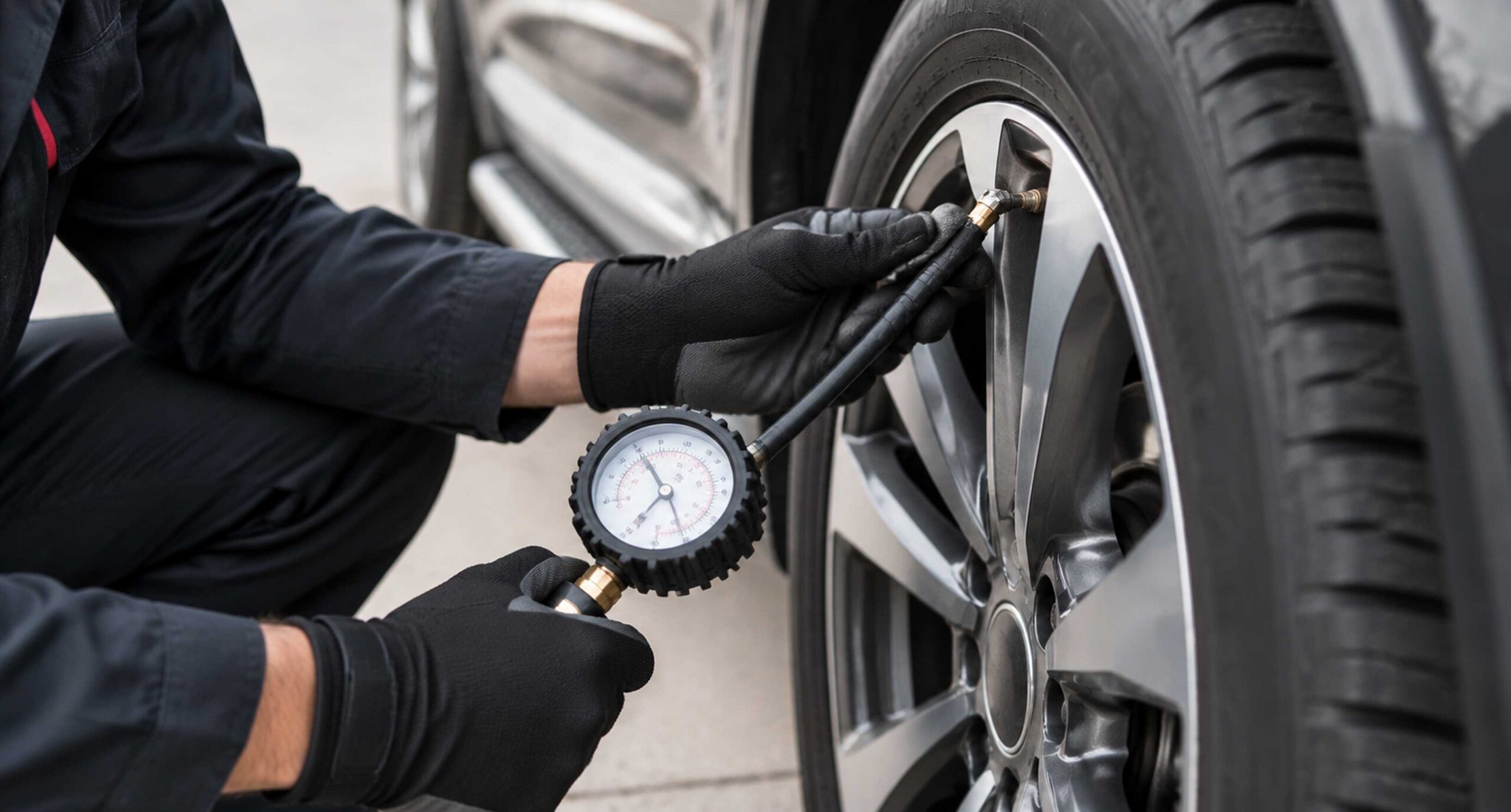
For most drivers, checking tire pressure in Spring Lake Park MN once every month provides an excellent starting point. You should also check your tires before any road trip, after significant temperature changes, or whenever your Tire Pressure Monitoring System (TPMS) warning light comes on.
A few minutes spent with a quality tire pressure gauge can improve safety, fuel efficiency, and tire longevity.
Signs Your Tire Pressure May Need Attention
You do not always need a warning light to recognize that your tires need attention. Learning to spot the early warning signs can help you avoid unnecessary wear and improve handling.
Some common indicators include:
- Uneven tread wear – Excessive wear along the center or outer edges often points to incorrect inflation.
- Reduced fuel economy – Underinflated tires increase rolling resistance, causing your engine to work harder.
- Vehicle pulling to one side – While this may indicate alignment issues, inconsistent tire pressure can also contribute.
- Slower steering response – Tires that lack proper inflation may feel less responsive during turns.
- Visible low tire appearance – If one tire appears noticeably lower than the others, inspect it immediately rather than waiting for a warning light.
These warning signs do not always indicate a major problem, but they should never be ignored. Catching pressure issues early can prevent uneven wear that permanently shortens tire life.
Expert Tip From Local Tire Professionals
Many drivers notice that their tire pressure increases after driving on a warm August afternoon and assume they should release some air. In reality, that increase is completely normal because heat causes the air inside the tire to expand.
Instead of adjusting warm tires, always check tire pressure in Spring Lake Park MN before driving or after the vehicle has been parked for several hours. This provides the most accurate reading and helps ensure your tires remain inflated to the manufacturer’s recommended specifications.
In the next section, we’ll cover how to inspect your tires for tread wear, sidewall damage, punctures, and other warning signs before they become costly repairs. You’ll also learn when a simple inspection is enough and when it’s time to have your tires evaluated by the experienced team at Heartland Tire & Auto Centers.
Real Savings
Heartland Values
Claim Yours and Book
An Appointment

How to Inspect Your Tires Like a Professional
Following Spring Lake Park MN tire care tips does not require specialized equipment or years of automotive experience. a simple visual inspection once a month can help you catch many common tire problems before they affect your safety or lead to expensive repairs.
Many tire issues begin gradually. A small puncture, uneven tread wear, or a developing sidewall crack may not change how your vehicle feels right away. However, over time, these problems can reduce traction, increase stopping distance, and make your vehicle less predictable during emergency maneuvers.
Spending just a few minutes inspecting your tires can give you greater peace of mind before your daily commute or your next road trip.
Check the Tread Depth
Your tire tread is designed to channel water away from the contact patch, helping your tires maintain grip on wet roads. As the tread wears down, your ability to brake and corner safely decreases.
Here are several ways to evaluate your tread condition.
- Use the penny test Place a penny into the tread with Lincoln’s head facing downward. If you can clearly see the top of his head, your tread is becoming too shallow and should be professionally evaluated.
- Look for uneven tread wear Compare the tread across the inside, center, and outside of each tire. One area wearing faster than another often points to inflation or suspension issues.
- Inspect all four tires Many drivers only look at the front tires. Since every tire experiences different loads and steering forces, each one should be checked individually.
- Watch for wear bars Modern tires include built-in tread wear indicators. When these bars become level with the tread, it’s time to replace the tire.
- Check after long summer trips Extended highway driving during August can accelerate tread wear, especially if the tires were already nearing the end of their service life.
A thorough tread inspection gives you valuable information about both your tires and your vehicle. Uneven wear patterns often reveal mechanical problems long before warning lights appear on the dashboard.
Examine the Sidewalls Carefully
The sidewall is one of the strongest parts of a tire, but it can still suffer damage from curbs, potholes, road debris, and age.
During your inspection, look for the following.
- Cracks in the rubber Small cracks may develop over time from age, sunlight, and changing temperatures. Larger cracks should be inspected by a professional.
- Bulges or bubbles A bulge usually indicates internal structural damage. Driving on a tire with a sidewall bubble greatly increases the risk of a blowout.
- Cuts or deep scrapes Sharp objects or curb impacts can weaken the sidewall even if the tire is not losing air.
- Embedded objects Nails, screws, or pieces of metal should never be pulled out unless a technician is ready to inspect and repair the tire.
- Discoloration or unusual wear Changes in appearance may indicate excessive heat, chemical exposure, or aging rubber.
Most sidewall damage cannot be repaired safely. If you notice any of these warning signs, having the tire inspected promptly can help prevent a roadside emergency.
Look for Signs of Air Leaks
Even a slow leak can become a serious problem if ignored. Some leaks lose only a few pounds of pressure each week, making them difficult to notice without routine inspections.
Common warning signs include:
- One tire consistently loses pressure If you repeatedly add air to the same tire, there is likely a leak that needs professional attention.
- Visible punctures Nails and screws may not cause immediate deflation, but they should always be evaluated.
- Hissing sounds Occasionally, air escaping from a puncture or damaged valve stem can be heard during inspection.
- Cracked valve stems Rubber valve stems naturally age and can eventually leak.
- Soap bubble test Applying soapy water around the valve stem or suspected puncture can help reveal slow leaks through bubbling.
Finding a leak early often means the tire can be repaired rather than replaced, depending on the location and severity of the damage.
Spring Lake Park MN Tire Care Tips From Heartland Tire & Auto Centers
Taking care of your tires is one of the simplest ways to improve vehicle safety, reduce long-term ownership costs, and enjoy a smoother driving experience throughout the year. By following these Spring Lake Park MN tire care tips, you’ll be better prepared for Minnesota’s changing weather, busy summer highways, and everyday commuting.
The team at Heartland Tire & Auto Centers is proud to serve drivers in Spring Lake Park with honest recommendations and quality workmanship. Whether you need routine maintenance or a complete tire inspection, we’re here to help you keep your vehicle safe and ready for every mile ahead.
Ready to make sure your tires are road-ready? Schedule an appointment with Heartland Tire & Auto Centers today. Our experienced technicians can inspect your tires, check inflation, perform a rotation, evaluate your alignment, and recommend the right services to help keep you driving safely throughout every Minnesota season.