



Getting stuck in traffic can make every trip feel longer and cause your fuel gauge to drop faster, too. For Minnesota drivers commuting through busy roads in Burnsville, Eagan, Brooklyn Park, Shakopee, and surrounding communities, stop-and-go traffic can be a regular part of the daily drive.
Traffic fuel-saving tips can help you reduce unnecessary fuel consumption while navigating crowded roads. Small changes such as smoother acceleration, gradual braking, less idling, and proper vehicle maintenance can make everyday driving more efficient without compromising safety.
The way your vehicle is maintained also matters. Proper tire pressure, healthy brakes, correct wheel alignment, and routine service can help reduce mechanical resistance and keep your vehicle performing efficiently in heavy traffic.
TL;DR: Traffic Fuel Saving Tips That Work
- Smooth acceleration and braking can improve fuel efficiency in stop-and-go traffic.
- Leave more space ahead to reduce unnecessary braking and repeated acceleration.
- Check tire pressure for better fuel economy and safer handling.
- Reduce unnecessary idling and avoid letting a modern vehicle warm up for long periods.
- Regular vehicle maintenance for fuel economy can help your engine, tires, brakes, and other systems operate efficiently.
Why Does Stop-and-Go Traffic Use More Fuel?
Stop-and-go traffic is tough on fuel economy because your vehicle repeatedly changes speed.
Every time traffic begins to move, the engine must expend energy to accelerate the vehicle. Then, when traffic stops again, that momentum is lost through braking. The cycle repeats over and over.
Aggressive acceleration and hard braking can reduce fuel economy by roughly 10% to 40% in stop-and-go traffic, according to U.S. Department of Energy guidance cited by AAA and other automotive resources.
That makes driving style one of the easiest areas to improve.
Your vehicle cannot control congestion, traffic lights, construction, or road closures. You can control how you respond to those conditions.
Traffic Fuel Saving Tips for Your Daily Commute
The best traffic fuel-saving tips are simple enough to use every day. You do not need special equipment or expensive modifications.
Here are practical ways to make your daily commute smoother, reduce unnecessary fuel use, and take some stress out of stop-and-go driving.
1. Accelerate Smoothly
When traffic starts moving, avoid treating every green light like a race.
Press the accelerator gradually and build speed smoothly. You want enough acceleration to keep up with traffic while avoiding unnecessary bursts of power.
Hard acceleration is especially wasteful when you know another red light or traffic slowdown is only a short distance ahead.
A smoother approach also makes your ride more comfortable for passengers and gives you more control around other vehicles.
2. Avoid Unnecessary Hard Braking
One of the easiest ways to waste the momentum you just created is to accelerate quickly and then brake hard a few seconds later.
Instead, look several vehicles ahead whenever traffic conditions allow.
If you see brake lights appearing farther down the road, ease off the accelerator early. You may be able to slow naturally instead of maintaining speed and then making a sudden stop.
This is an important part of smooth driving in heavy traffic.
You are not trying to coast unpredictably or leave an unsafe gap. Maintain an appropriate following distance and adjust your speed gradually.
3. Leave More Space Ahead
Following too closely often creates a cycle of acceleration and braking.
The driver ahead slows down, so you brake. Traffic moves again, so you accelerate. Then the driver ahead brakes again, forcing you to repeat the process.
A reasonable following distance gives you more room to respond gradually. It can also reduce stress because you are watching traffic develop instead of reacting at the last second.
For drivers learning to drive smoothly in heavy traffic, this is one of the most useful habits to practice.
4. Look Beyond the Vehicle Directly Ahead
Your view should extend farther than the car immediately in front of you.
Watch traffic lights, turning vehicles, pedestrians, lane merges, construction zones, and brake lights of several vehicles ahead when possible.
Suppose you are approaching a red light and traffic has already stopped. Continuing to accelerate toward the line before braking simply uses fuel without getting you there meaningfully faster.
Instead, ease off earlier and allow the vehicle to slow progressively.
This kind of anticipation is a major part of improving fuel efficiency in stop-and-go traffic.
5. Minimize Unnecessary Idling
Idling uses fuel even though your vehicle is not moving.
There are times when stopping the engine is inappropriate or impractical, so do not treat every brief traffic light as a reason to switch it off manually.
Many newer vehicles have automatic start-stop systems designed to reduce fuel use during certain stops. If your vehicle has this feature, follow the manufacturer’s recommendations rather than automatically disabling it.
For longer periods of inactivity, such as waiting outside a business or sitting in a drive-through, consider whether you actually need to keep the engine running.
Avoid long warm-up periods, too. Modern vehicles generally reach operating temperature more quickly when driven gently than when stationary for an extended period.
6. Plan Around Heavy Traffic When You Can
Sometimes the most effective way to save fuel in traffic is to spend less time in traffic.
If your schedule allows, consider traveling outside the busiest commuting periods. Combine errands into one trip instead of making several separate drives.
A slightly longer route may use less fuel if it avoids prolonged congestion and repeated stops.
However, do not automatically choose the longest or fastest-looking route suggested by an app. Look at actual traffic conditions and consider how many stops and slowdowns you will encounter. Route planning is one of the simplest traffic fuel-saving tips for commuters with some flexibility.
Putting these habits together can make a noticeable difference over time. Smooth acceleration, gradual braking, proper spacing, and smarter route planning can help you use less fuel while making everyday traffic easier to manage.
Does Vehicle Maintenance Improve Fuel Economy?
Yes. Your vehicle’s mechanical condition can affect how efficiently it uses fuel.
This is where vehicle maintenance for fuel economy becomes especially important.
A vehicle with worn components, incorrect tire pressure, dragging brakes, alignment issues, or an engine problem may use more fuel than expected.
Regular maintenance can help identify these problems before they become larger and more expensive repairs.
-
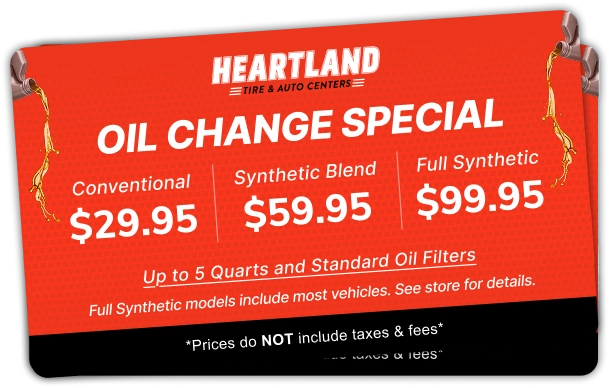
Keep Up With Oil Changes
Engine oil helps lubricate moving components and allows the engine to operate as designed.
Follow your vehicle manufacturer’s recommended oil type and service intervals. If you frequently drive in severe conditions, ask a qualified technician whether your driving habits require a different maintenance schedule.
An oil change is not a magic fuel-saving treatment, but properly maintaining the engine supports efficient operation.
-
Check the Air Filter When Appropriate
A heavily restricted engine air filter can affect engine operation.
Modern fuel-injected vehicles manage the air-fuel mixture electronically, so replacing an air filter should be based on its condition and the manufacturer’s maintenance recommendations rather than on the old assumption that every dirty filter automatically causes a dramatic drop in MPG.
This is a good example of why professional vehicle inspection is useful: maintenance should be based on the vehicle’s actual condition.
Pay Attention to Warning Lights
Do not ignore a check engine light simply because the vehicle still seems to drive normally.
An engine or emissions problem can affect fuel consumption, drivability, and reliability.
If your fuel economy suddenly drops without a clear change in driving conditions, have the vehicle inspected rather than assuming traffic is the only explanation.
That is an important part of vehicle maintenance for fuel economy.
Real Savings
Heartland Values
Claim Yours and Book
An Appointment
What If My Fuel Economy Suddenly Gets Worse?
A gradual change can occur due to seasonal conditions, traffic, driving patterns, or increased A/C use.
A sudden or significant change deserves more attention.
Consider these questions:
- Did your driving route recently become more congested?
- Are you making more short trips?
- Is your tire pressure correct?
- Is the check engine light on?
- Does the vehicle pull to one side?
- Are the tires wearing unevenly?
- Do you smell fuel?
- Does the engine idle roughly?
- Have you noticed reduced acceleration?
- Are the brakes dragging or making unusual noises?
If several of these symptoms appear together, do not assume you simply need to change your driving habits.
A professional inspection can help determine whether a mechanical problem is contributing to increased fuel consumption.
Use These Traffic Fuel Saving Tips on Your Next Drive
If your fuel economy has changed, your tires are wearing unevenly, or your vehicle does not feel as efficient as it once did, let the team at Heartland Tire & Auto Centers take a look.
Schedule an appointment at Heartland Tire & Auto Centers and have your vehicle checked by a professional team that can help identify maintenance or repair issues affecting performance and efficiency.