


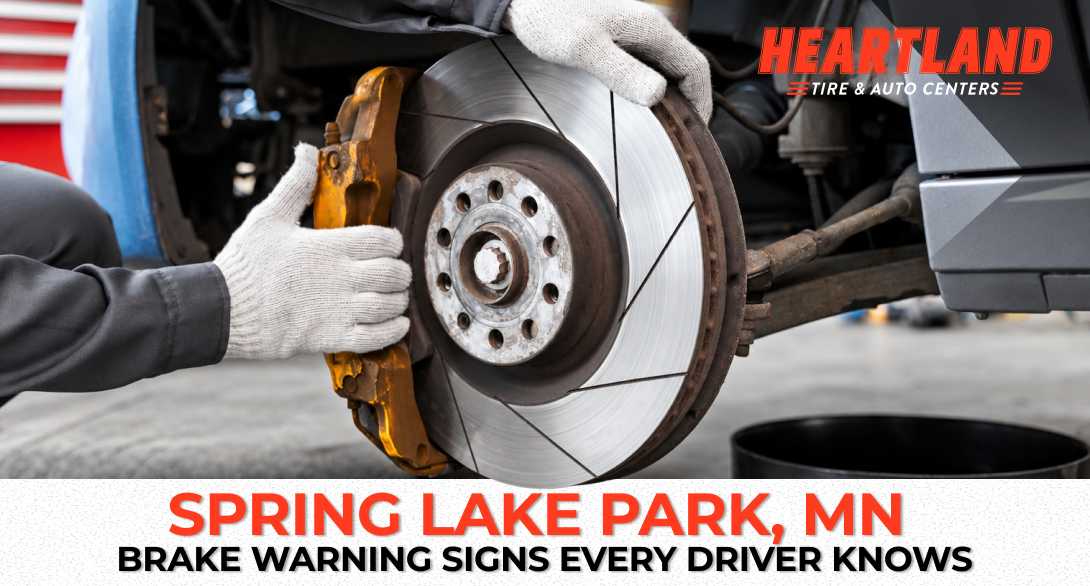
Your brakes are one of the most important safety systems on your vehicle, yet they’re often easy to overlook until something feels wrong. A faint squeal, a dashboard warning light, or a soft brake pedal may seem minor today, but these early symptoms often point to problems that become more expensive and dangerous if ignored.
Recognizing Spring Lake Park MN brake warning signs early helps protect you, your passengers, and everyone else on the road. Whether you’re a local commuter, an SUV owner driving through changing Minnesota weather, or a first-time car owner learning vehicle maintenance, knowing what your brakes are telling you can prevent unexpected breakdowns and improve your confidence behind the wheel.
At Heartland Tire & Auto Centers, our technicians inspect brake systems every day and understand how local driving conditions affect brake performance. From stop-and-go traffic to icy winter roads, Minnesota driving places unique demands on your braking system.
TL;DR – Spring Lake Park MN Brake Warning Signs at a Glance
- Spring Lake Park MN brake warning signs should never be ignored because early repairs are usually less expensive than major brake system repairs.
- Strange noises, warning lights, vibrations, or changes in brake pedal feel often indicate it’s time for a professional inspection.
- Regular brake inspection in Spring Lake Park helps identify worn components before they become safety hazards.
- If you notice signs you need new brake pads, scheduling service quickly can prevent damage to your brake rotors and calipers.
- Professional brake repair in Spring Lake Park MN helps keep your vehicle safe throughout every Minnesota season.
What Are Spring Lake Park MN Brake Warning Signs?
Many brake problems develop gradually instead of failing all at once. Your vehicle usually provides several warning signs before braking performance becomes unsafe. Learning to recognize these symptoms allows you to schedule repairs before a small issue becomes a major expense.
Modern vehicles also include electronic safety systems that monitor brake performance. While technology is helpful, your senses remain one of the best diagnostic tools. Listening for unusual sounds, paying attention to pedal feel, and noticing changes in stopping distance all help identify problems early.
Why Brake Problems Should Never Wait
Brakes convert your vehicle’s motion into heat every time you slow down. Because they perform this demanding task thousands of times each year, every component naturally wears over time.
Ignoring brake problems can lead to:
- Longer stopping distances – Worn brake components reduce your ability to stop quickly in emergencies, increasing the risk of accidents.
- Higher repair costs – Replacing brake pads early is much less expensive than replacing damaged rotors, calipers, or hydraulic components.
- Reduced vehicle control – Faulty brakes can compromise steering stability, especially during sudden stops or on slippery road conditions.
- Additional component damage – One worn brake part often causes unnecessary wear on surrounding components.
- Safety concerns for everyone – Reliable brakes protect your family, passengers, pedestrians, and other drivers.
Taking action early keeps repairs simpler and helps your vehicle perform as designed. A routine brake inspection in Spring Lake Park can often identify wear long before symptoms become severe.
The Most Common Spring Lake Park MN Brake Warning Signs
Every vehicle communicates brake problems differently, but several symptoms appear more frequently than others. Understanding what each warning sign means helps you know when immediate service is necessary.
Squealing or Screeching Brakes
High-pitched squealing is one of the earliest and most recognizable brake warnings.
Common causes include:
- Worn brake pads – Most brake pads contain built-in wear indicators designed to make noise when replacement is needed.
- Moisture buildup – Morning dew or rain can temporarily create squealing until the brakes warm up.
- Brake dust accumulation – Dirt and debris between brake components may create temporary noise.
- Low-quality brake materials – Some aftermarket pads naturally produce more noise than premium replacements.
- Glazed brake pads – Excessive heat can harden the pad surface, reducing braking efficiency.
If squealing continues after several stops, it often indicates one of the signs you need new brake pads and should be inspected soon.
A quick inspection now often prevents rotor damage later, reducing both repair time and overall cost.
Grinding Sounds While Braking
Grinding is much more serious than squealing.
Unlike warning squeals, grinding usually means the brake pad material has worn away completely, allowing metal components to contact each other directly.
Watch for these situations:
- Metal-on-metal contact – This often causes severe rotor damage that requires replacement.
- Damaged brake rotors – Grooves and scoring reduce braking performance and create vibration.
- Loose brake hardware – Broken clips or mounting hardware can produce grinding noises.
- Debris trapped in the brake assembly – Small rocks may temporarily create grinding sounds.
- Brake caliper problems – Sticking calipers may keep brake pads pressed against the rotor continuously.
Grinding should always be treated as an urgent repair. Continuing to drive increases repair costs and reduces braking safety.
Drivers needing brake repair in Spring Lake Park MN should schedule service immediately when grinding develops instead of waiting until the next maintenance visit.
Real Savings
Heartland Values
Claim Yours and Book
An Appointment

Why Your Brake Pedal Feels Different
Your brake pedal provides valuable information about the health of your braking system.
Changes in pedal feel often appear before visible damage occurs.
Soft or Spongy Brake Pedal
A brake pedal should feel firm and responsive.
If it sinks toward the floor or feels unusually soft, several issues may be responsible.
Possible causes include:
- Air in the brake lines – Air reduces hydraulic pressure and weakens braking performance.
- Brake fluid leaks – Low fluid levels prevent proper pressure throughout the braking system.
- Moisture-contaminated brake fluid – Brake fluid naturally absorbs moisture over time, reducing effectiveness.
- Failing master cylinder – Internal seal failure affects hydraulic pressure.
- Damaged brake hoses – Flexible brake lines can weaken with age and heat.
These conditions require prompt professional diagnosis because hydraulic brake failures directly affect stopping ability.
Regular brake inspection in Spring Lake Park helps detect fluid problems before they create dangerous driving conditions.
Hard Brake Pedal
Sometimes the opposite problem occurs.
If your brake pedal suddenly becomes difficult to press, braking may require much more force than normal.
Possible causes include:
- Brake booster failure – Vacuum-assisted braking becomes less effective.
- Vacuum hose leaks – Reduced engine vacuum limits brake assist.
- Restricted hydraulic components – Internal blockages affect brake operation.
- Engine-related vacuum issues – Certain engine problems indirectly affect braking performance.
- Frozen brake components during winter – Minnesota’s cold temperatures occasionally contribute to temporary brake stiffness.
A hard pedal should always be inspected because emergency stopping distances can increase significantly.
Brake performance should remain smooth and predictable regardless of weather conditions or driving habits.
Expert Tip From Experienced Brake Technicians
According to the National Highway Traffic Safety Administration (NHTSA), brake-related problems contribute to thousands of vehicle crashes every year, many of which could be prevented through routine maintenance and early inspections.
A simple habit many experienced mechanics recommend is paying attention to how your brakes feel every time you drive. Because changes often happen gradually, noticing even small differences in stopping distance, pedal pressure, or braking noise allows problems to be corrected before they become expensive repairs or serious safety risks.
Vehicle Pulls to One Side While Braking
Your vehicle should stop in a straight line when you apply the brakes. If it drifts or pulls left or right, the braking force is uneven between the wheels. This can make it harder to control your vehicle, especially during emergency stops or on wet and snowy Minnesota roads.
Several issues can cause your vehicle to pull while braking. A professional inspection can determine the exact cause before additional components are affected.
Common reasons include:
- A sticking brake caliper – A seized caliper keeps one brake pad pressed against the rotor, causing uneven braking and faster brake wear.
- Uneven brake pad wear – Brake pads that wear differently on each side create inconsistent stopping power.
- Contaminated brake pads or rotors – Oil, grease, or brake fluid on the braking surface reduces friction and affects braking balance.
- Brake hose restrictions – A damaged brake hose may prevent proper hydraulic pressure from reaching one wheel.
- Suspension or steering issues – Worn suspension parts sometimes mimic brake problems, making a complete inspection important.
A vehicle that pulls while braking should never be ignored. Besides reducing control, uneven braking can shorten the life of your tires and suspension components.
If you notice this symptom, scheduling brake repair in Spring Lake Park MN as soon as possible helps restore safe handling and prevents additional wear.
Steering Wheel Vibrates During Braking
A shaking steering wheel is one of the most common complaints technicians hear from drivers. Although tire issues can sometimes cause vibration, shaking that only happens while braking usually points to brake system problems.
The vibration often starts gradually before becoming stronger over time.
Possible causes include:
- Warped brake rotors – Heat buildup causes uneven rotor surfaces, leading to vibration every time the brakes are applied.
- Rotor thickness variation – Small differences in rotor thickness create noticeable pulsation.
- Improper wheel installation – Uneven wheel torque can contribute to rotor distortion.
- Excessive brake heat – Frequent hard braking or towing heavy loads accelerates rotor wear.
- Loose suspension components – Worn steering parts may amplify brake vibrations.
Drivers often assume warped rotors require immediate replacement. In some cases, resurfacing may be possible if the rotors still meet manufacturer specifications. A professional inspection determines the safest and most cost-effective solution.
Routine brake inspection in Spring Lake Park helps identify rotor wear before vibration becomes severe.
Dashboard Brake Warning Lights
Modern vehicles constantly monitor brake system performance. Dashboard warning lights are designed to alert you before a problem becomes dangerous.
While warning lights should never be ignored, each light indicates a different issue.
Brake Warning Light
The red brake warning light may indicate:
- Low brake fluid
- Parking brake still engaged
- Hydraulic brake system problem
- Brake pressure imbalance
- Brake component failure
If the light remains on after releasing the parking brake, schedule service immediately.
ABS Warning Light
The Anti-lock Braking System (ABS) helps maintain steering control during hard braking.
An illuminated ABS light may indicate:
- Faulty wheel speed sensors
- Damaged ABS wiring
- ABS module malfunction
- Hydraulic control issues
- Electronic communication errors
Although standard braking usually continues to work, anti-lock braking assistance may be unavailable during emergency stops.
Professional brake repair in Spring Lake Park MN ensures these electronic safety systems continue working properly when you need them most.
Burning Smell After Braking
A strong burning odor after driving deserves immediate attention. Brakes naturally generate heat, but excessive heat usually indicates an underlying problem.
Potential causes include:
- Dragging brake calipers – Constant contact creates excessive friction and heat.
- Overheated brake pads – Aggressive driving or mountain descents can overheat braking components.
- Stuck parking brake – Driving with the parking brake partially engaged creates significant heat.
- Brake fluid overheating – Excessive temperatures reduce braking efficiency.
- Wheel bearing problems – Although not always brake-related, failing wheel bearings may create similar odors.
If you notice smoke, excessive heat coming from a wheel, or a strong burning smell, stop driving as soon as it is safe to do so. Allow the brakes to cool before having the vehicle inspected.
Ignoring overheating brakes increases the risk of brake failure and costly repairs.
How Often Should You Have Your Brakes Inspected?
Many manufacturers recommend inspecting the brake system at least once a year. However, driving habits and local conditions may require more frequent checks.
Consider scheduling an inspection:
- Every 12 months as part of routine maintenance.
- During every tire rotation so technicians can visually inspect brake components.
- Before long road trips for added peace of mind.
- Before winter weather arrives to prepare for slippery driving conditions.
- Anytime you notice unusual noises, vibrations, or warning lights.
Even if your brakes seem to work normally, routine inspections often catch early wear that drivers cannot see or feel.
Preventive maintenance helps reduce unexpected repairs while keeping your vehicle safe throughout the year.
Schedule Brake Repair in Spring Lake Park MN with Heartland Tire & Auto Centers
If you’ve noticed squealing brakes, dashboard warning lights, a soft brake pedal, or any other Spring Lake Park MN brake warning signs, don’t wait until the problem becomes more serious.
The experienced team at Heartland Tire & Auto Centers is ready to inspect your braking system, identify the cause of the issue, and recommend the right solution for your vehicle. From routine brake pad replacement to complete brake system repairs, we’re here to help keep you driving safely throughout every season in Minnesota.
Schedule your appointment today: https://takeittoheartlandtire.com/request-appointment/
We look forward to helping you drive with confidence.