



Every Minnesota winter brings snowy roads, icy conditions, and road salt. While salt improves traction and helps melt ice, it can also speed up rust and corrosion, putting your vehicle at risk.
If you want to protect your car from Minnesota road salt, taking preventative steps early can help you avoid costly repairs. Rust develops gradually as salty moisture reaches scratches, seams, brake lines, suspension parts, and the undercarriage. Once corrosion starts, it becomes much more difficult and expensive to repair.
This guide explains practical ways to protect your vehicle throughout the winter, from preventing rust and washing away road salt to maintaining your car so it stays safer, more reliable, and in better condition for years to come.
TL;DR – Protect Your Car From Minnesota Road Salt
- Protect your car from Minnesota road salt by washing it regularly, especially the undercarriage.
- Road salt speeds up corrosion on brake lines, suspension parts, exhaust systems, and vehicle frames.
- Applying protective waxes or corrosion-resistant coatings before winter helps reduce damage.
- Repair paint chips quickly because exposed metal rusts much faster.
- Routine inspections at Heartland Tire & Auto Centers can identify corrosion before it turns into expensive repairs.
Protect Your Car From Minnesota Road Salt Before Corrosion Begins
Many drivers think rust only affects older vehicles. In reality, corrosion can begin during your car’s very first Minnesota winter if road salt remains on the vehicle long enough.
Road salt works by lowering water’s freezing point, making roads safer during snow and ice events. Unfortunately, that same salt creates an electrolyte that accelerates corrosion whenever moisture reaches exposed metal. Minnesota uses hundreds of thousands of tons of road salt each winter, making rust prevention an important part of vehicle ownership. (Minnesota PCA)
Why Minnesota Road Salt Is So Tough on Vehicles
Minnesota’s winter conditions create the perfect environment for corrosion because salt, melting snow, freezing temperatures, and moisture repeatedly interact throughout the season.
Several factors contribute to accelerated rust:
- Heavy road salt application – Highways, city streets, and neighborhood roads receive significant amounts of deicing salt throughout winter.
- Frequent freeze and thaw cycles – Melting snow allows salty water to reach hidden metal surfaces before freezing again.
- Salt spray while driving – Tires continuously throw salty slush into wheel wells and underneath your vehicle.
- Long winters – Minnesota’s extended cold season means your vehicle remains exposed for several months.
- Hidden moisture – Salt becomes trapped inside seams, frame rails, suspension components, and underbody panels where corrosion often starts unnoticed.
The danger isn’t limited to visible rust on doors or fenders. Many expensive repairs begin beneath the vehicle, where corrosion quietly progresses for years before symptoms appear.
Understanding these risks helps explain why preventative maintenance is far less expensive than repairing rust-related damage later.
What Parts of Your Car Are Most Vulnerable to Road Salt
Not every part of your vehicle faces the same level of exposure. Certain components are constantly sprayed with salty slush whenever you drive on treated roads.
The areas most likely to develop corrosion include:
- Undercarriage – This area receives the greatest amount of salt and moisture, making it the first place corrosion often develops.
- Brake lines – Rust can weaken metal brake lines over time, leading to leaks that compromise braking performance.
- Suspension components – Control arms, springs, and mounting points experience continuous exposure throughout winter.
- Exhaust system – Moisture and salt accelerate the deterioration of pipes, mufflers, and hangers.
- Wheel wells – Packed snow and road debris hold moisture against painted metal for extended periods.
- Paint chips and scratches – Even a small chip can expose bare metal, allowing rust to spread beneath the surrounding paint.
Many drivers don’t notice these problems because they develop underneath the vehicle long before rust becomes visible on the exterior.
Routine inspections help identify these hidden trouble spots early, giving you more affordable repair options and helping your vehicle stay dependable through many Minnesota winters.
How Often Should You Wash Your Car During a Minnesota Winter?
One of the most common questions drivers ask is how often they should wash their vehicle once snow starts falling. The answer depends on how frequently you drive and how much road salt has accumulated, but regular washing remains one of the most effective ways to protect your car from Minnesota road salt.
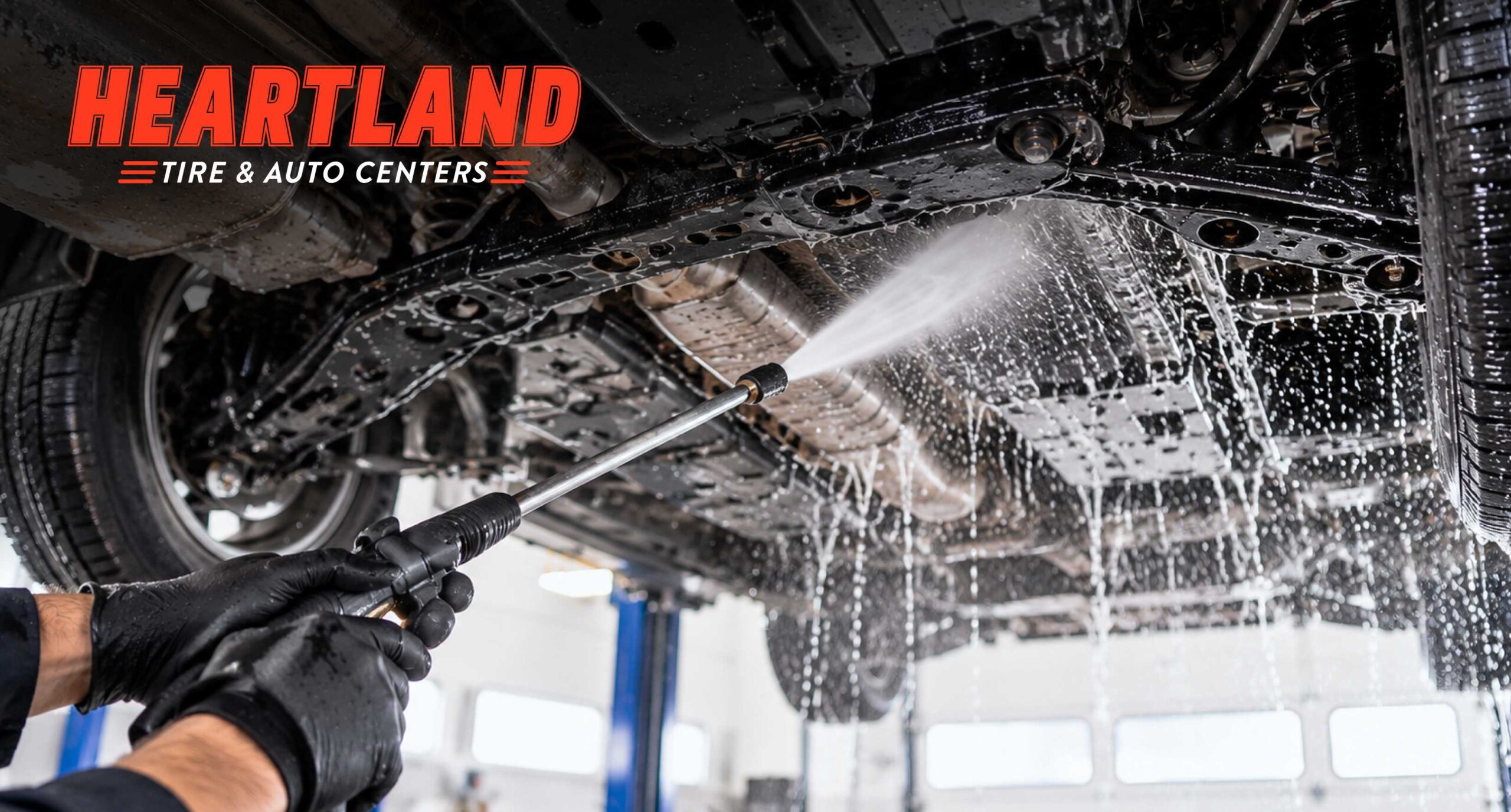
A quick rinse after a storm helps, but a thorough wash, including the undercarriage, removes the salt hiding in places you can’t easily see. Those hidden areas are where corrosion often begins.
A Good Winter Car Wash Schedule
Sticking to a consistent schedule helps keep salt buildup under control throughout the season.
- Wash every one to two weeks – If you drive daily, washing your vehicle every seven to fourteen days helps remove fresh salt before it has time to cause corrosion.
- Wash after major snowstorms – Roads often receive additional salt before and during storms, leaving vehicles coated in a thick layer of salty slush.
- Prioritize the undercarriage – The frame, suspension, brake lines, and fuel lines collect far more salt than the painted body.
- Wash your vehicle before storing it – Salt should never sit on your car for days or weeks if you won’t be driving.
- Continue washing into spring – Salt residue often remains on roads well after the snow has melted.
Following a routine helps prevent salt buildup over time, reducing the likelihood of rust forming in hidden areas.
Should You Wash Your Car When It’s Freezing Outside?
Many people avoid washing their vehicle because they’re worried about frozen doors or ice buildup. While that’s understandable, skipping washes for weeks allows salt to remain on the vehicle much longer.
Instead, consider these tips:
- Choose a warmer day when temperatures are above freezing if possible.
- Visit a professional car wash with heated drying equipment.
- Dry the door seals to reduce freezing.
- Apply silicone lubricant to the weather stripping if doors tend to freeze shut.
- Open and close doors once after washing to prevent ice from sealing them shut.
The small inconvenience of washing during winter is far less costly than repairing corrosion later.
Real Savings
Heartland Values
Claim Yours and Book
An Appointment

What Is the Best Way to Protect Your Car From Minnesota Road Salt?
While washing removes the road salt that’s already on your vehicle, combining several preventative measures provides much stronger protection throughout the winter. Every layer of protection helps reduce the amount of salt and moisture that reaches vulnerable metal surfaces, lowering the risk of rust over time.
Think of rust prevention as a complete maintenance plan rather than relying on a single solution. A combination of regular washing, protective coatings, and prompt repairs gives your vehicle the best chance of staying in excellent condition through Minnesota’s harsh winters.
Apply Wax Before Winter Arrives
A quality wax creates a protective barrier between your vehicle’s paint and salty moisture. It helps reduce direct contact with contaminants while making it easier to wash away dirt and road grime before they cause damage.
Benefits include:
- Helps repel moisture – Water beads up and rolls off more easily, reducing the amount of moisture that stays on the paint.
- Reduces salt adhesion – Salt and grime have a harder time sticking to a smooth, protected surface, making routine washing more effective.
- Protects the clear coat – Wax adds another layer of defense against winter contaminants that can gradually wear down your vehicle’s finish.
- Makes washing easier – Dirt, slush, and road salt rinse away with less effort, helping keep your vehicle cleaner between washes.
- Improves appearance – Your vehicle maintains a cleaner, glossier finish throughout the winter, even after driving on treated roads.
Applying wax in late fall, before the first snowfall, gives your vehicle a strong foundation for the months ahead. If you notice water no longer beading on the surface, it may be time to reapply wax for continued protection.
Consider Professional Undercoating
Many Minnesota drivers choose professional rust protection because the undercarriage is most exposed to road salt throughout winter. Even with regular washing, some areas underneath the vehicle are difficult to clean thoroughly, allowing salt and moisture to linger.
Professional undercoating can help:
- Shield exposed metal – Creates an added barrier between metal components and corrosive road salt.
- Protect frame components – Covers areas that are difficult to reach during routine washing.
- Reduce corrosion around suspension parts – Helps protect control arms, springs, and other suspension components from premature rust.
- Extend the life of brake and fuel lines – Reduces exposure that can lead to corrosion and expensive repairs.
- Provide long-term peace of mind – Offers extra protection for drivers who plan to keep their vehicles for many years.
Not every vehicle requires the same type of undercoating, so it’s worth discussing your driving habits, vehicle age, and current condition with a trusted technician. They can recommend the most appropriate option based on your specific needs.
Repair Paint Damage Quickly
Tiny rock chips and scratches may seem minor, but they expose bare metal to moisture and road salt. Once corrosion begins beneath the paint, it can spread beyond the original damage and become much more expensive to repair.
Inspect your vehicle regularly and address these issues as soon as possible:
- Paint chips – Seal exposed metal before rust has a chance to develop.
- Deep scratches – Touch up damaged areas to restore the protective paint layer.
- Cracked clear coat – Prevent moisture from reaching the paint underneath.
- Rust bubbles – Have them inspected promptly, as they often indicate corrosion beneath the surface.
- Damaged wheel finishes – Repair peeling or chipped coatings to help protect alloy or steel wheels from corrosion.
Early touch-ups cost far less than repairing widespread rust or replacing damaged body panels. By fixing cosmetic damage promptly, you protect both your vehicle’s appearance and its structural integrity, helping it stay in better condition for years to come.
Protect Your Car From Minnesota Road Salt With Heartland Tire & Auto Centers
Minnesota winters can be tough on your vehicle, but regular maintenance helps reduce road salt damage and prevent costly rust repairs. Washing your vehicle, protecting the undercarriage, and scheduling routine inspections all help keep it in excellent condition.
At Heartland Tire & Auto Centers, our experienced technicians help drivers across Brainerd, Brooklyn Park, Burnsville, Champlin, Eagan, Monticello, Ramsey, Savage, Shakopee, Spring Lake Park, and West Bloomington prepare their vehicles for winter with preventative maintenance and thorough inspections.
If you want to protect your car from Minnesota road salt, schedule a preventative inspection today. Catching corrosion early can help extend your vehicle’s life and reduce expensive repairs down the road.