



Your tires affect how safely your vehicle accelerates, turns, and stops. When they lose air, even a small pressure drop can affect their performance, and driving on a severely underinflated tire can cause costly damage or a dangerous blowout.
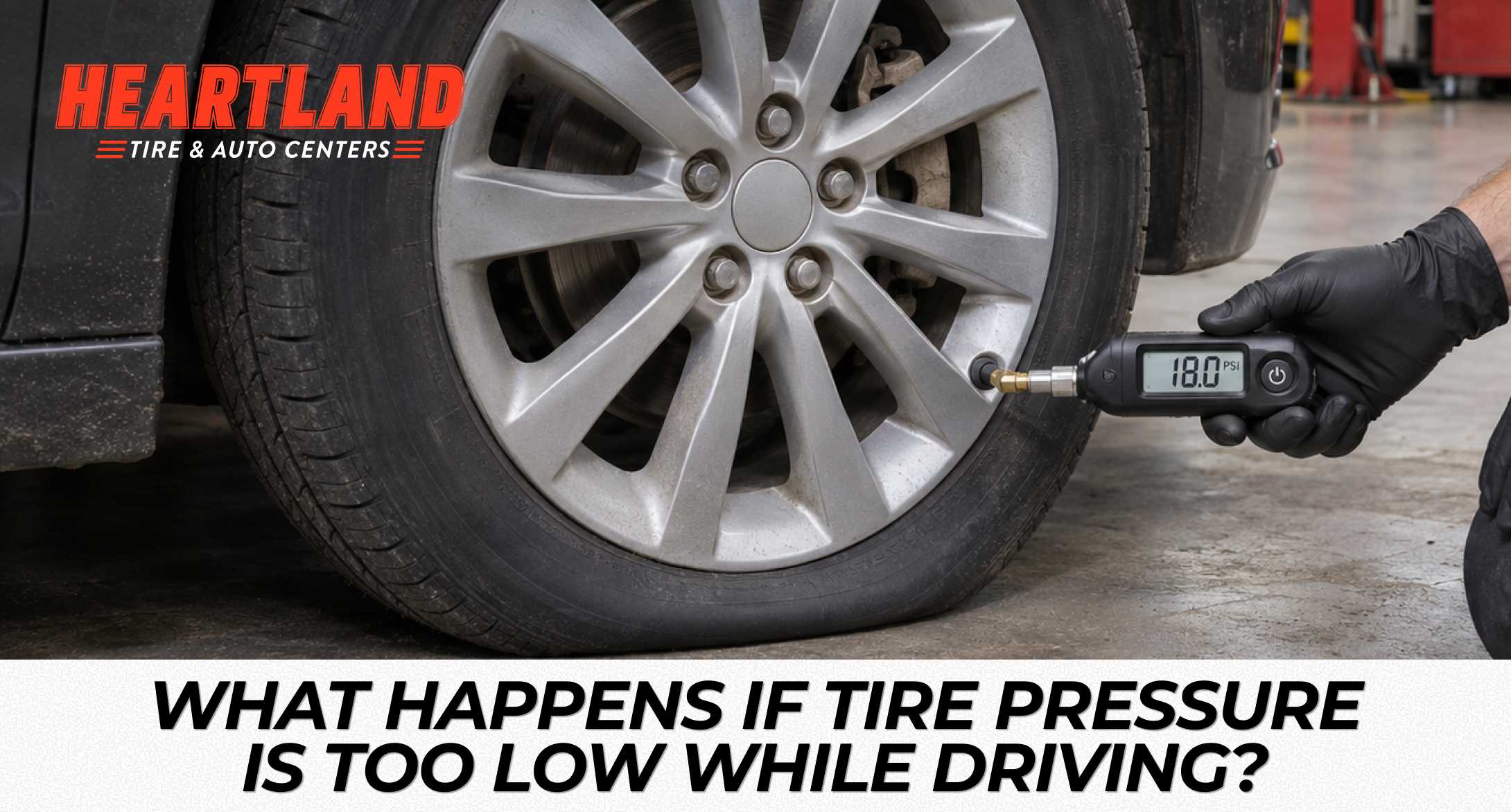
So, what happens if tire pressure is too low while driving? The tire flexes more than it should, generates excess heat, and creates additional rolling resistance. You may also notice heavier steering, reduced stability, uneven tire wear, and lower fuel efficiency. The risks increase when you continue driving at highway speeds or carry a heavy load.
For drivers across Minnesota, knowing how to recognize low tire pressure and respond safely can help prevent a minor maintenance issue from becoming a roadside emergency. Heartland Tire & Auto Centers provides tire inspections, tire repair, and tire pressure monitoring system (TPMS) services to help keep your vehicle road-ready.
TL;DR: Quick Guide on What Happens If Tire Pressure Is Too Low
- Tires can overheat – Low air pressure causes excessive sidewall flex, which generates heat and can damage the tire’s internal structure.
- Steering and braking can suffer – Underinflated tires can reduce stability and make it harder to control your vehicle during turns or emergency stops.
- A blowout can occur – Severe underinflation, especially during extended high-speed driving, raises the risk of tire failure.
- Fuel costs and tire wear can increase – Underinflated tires create more rolling resistance and may wear unevenly, shortening their service life.
- Prompt action can prevent further damage – Check tire pressure against the manufacturer’s recommended cold PSI and arrange an inspection if a tire keeps losing air.
How Low Tire Pressure Affects Your Vehicle While Driving
Low tire pressure changes how a tire supports your vehicle and contacts the road. The consequences depend on how far the pressure has dropped, how long you drive, your speed, the vehicle’s load, and road conditions.
Here are the main problems drivers should understand.
1. Tires Generate Excess Heat
Air pressure helps a tire maintain its intended shape under the vehicle’s weight. When pressure drops, the sidewalls flex more with every tire rotation.
That repeated movement generates heat inside the tire. Prolonged overheating can weaken its internal components and contribute to tread separation or sudden tire failure.
Highway driving deserves particular caution because sustained speeds give an underinflated tire less opportunity to cool down. A tire that looks reasonably normal from the outside may already have internal damage.
2. Steering and Handling Become Less Predictable
The effects of underinflated tires on handling can become noticeable when you turn, change lanes, or drive around a curve.
A tire with insufficient pressure may respond less precisely to steering inputs. The vehicle can feel sluggish, unstable, or unusually heavy to steer. If one tire has substantially less pressure than the others, you may also notice the vehicle pulling to one side.
These changes matter most when you need to react quickly. A sudden obstacle, a sharp curve, or a slippery road can leave you with less control than you expect.
3. Braking Performance Can Change
Tires need a suitable contact patch and sufficient grip to help your vehicle slow down safely. Underinflation changes the tire’s shape and can affect its ability to transmit braking forces effectively.
The result may be less predictable stopping performance, particularly during hard braking or evasive maneuvers.
Remember that stopping distance also depends on speed, road surface, tread condition, and brake performance. Proper tire pressure cannot eliminate every hazard, but it helps your tires work as designed.
4. Tire Damage and Blowout Risk Increase
A severely underinflated tire can suffer internal damage even when the tread still looks usable. The sidewalls may bend excessively, and the extra heat can weaken the tire’s structure.
Driving over potholes or other road hazards can make matters worse because a soft tire has less protection against impact damage.
A blowout is especially dangerous at highway speeds because the sudden loss of pressure can affect vehicle control. If a tire looks visibly collapsed, has a bulging sidewall, or is losing air rapidly, do not continue driving on it.
5. Fuel Economy and Tire Life Suffer
Underinflated tires increase rolling resistance, so the engine must use more energy to keep the vehicle moving.
Over time, this can increase fuel consumption. Low pressure can also concentrate wear along the inner and outer tread shoulders, depending on the tire and vehicle setup.
The financial impact goes beyond fuel. Uneven wear and internal damage can force you to replace tires earlier than expected. Keeping pressure at the recommended level helps you get better value from your existing tires.
Real Savings
Heartland Values
Claim Yours and Book
An Appointment
How Low Tire Pressure Affects Different Driving Conditions
The danger depends partly on where and how you drive. A short trip through residential streets presents different demands from a long highway journey or a drive with a fully loaded SUV.
Highway Driving
High speeds increase the amount of heat generated by an underinflated tire. If the tire is already significantly low, a long highway trip can raise the risk of structural damage and failure.
If you notice unusual vibration, pulling, or a tire pressure warning during a highway drive, reduce speed smoothly and look for a safe place to stop. Avoid sudden braking or sharp steering movements.
City Driving and Potholes
Frequent turns, braking, and acceleration place changing forces on your tires. Underinflation can make the vehicle feel less responsive during these maneuvers.
Potholes and broken pavement add to the concerns. A tire with too little air may be more vulnerable to impact damage, including damage to the sidewall or wheel.
Drivers in Brainerd, Brooklyn Park, Burnsville, and other Minnesota communities should check their tires regularly, especially after striking a substantial pothole.
Cold Weather and Temperature Changes
Cold weather can lower tire pressure because air contracts as its temperature falls. A tire that was correctly inflated during a warmer afternoon may read lower on a cold Minnesota morning.
Check pressure when the tires are cold, ideally before driving. Use the vehicle manufacturer’s recommended pressure rather than adding air based on a guess.
Do not release air from a warm tire simply because its pressure exceeds the cold specification. Tire pressure normally rises as the tire warms during driving.
Heavy Loads and Long Trips
Passengers, luggage, tools, and cargo add weight to your vehicle. Underinflated tires may struggle to support the intended load, increasing stress and heat.
Before a long trip, check all four tires and the spare if your vehicle has one. Consult your owner’s manual for any special pressure recommendations for heavy loads or towing.
A quick inspection before departure is far easier than dealing with tire damage on the roadside.
What Is the Correct Tire Pressure for Your Vehicle?
There is no single PSI number that works for every car, SUV, or truck. The correct pressure depends on the vehicle and its tire specifications.
To find your recommended pressure:
- Check the driver’s door placard. Look for the tire information label on the driver’s-side door frame or door jamb.
- Consult the owner’s manual. It may list different pressures for front and rear tires, spare tires, or specific load conditions.
- Use a reliable tire pressure gauge. Measure the pressure rather than judging the tire by appearance.
- Check when the tires are cold. Ideally, the vehicle should have been parked for at least three hours.
- Inflate to the recommended PSI. Follow the vehicle manufacturer’s specifications for your current load.
The pressure printed on the tire’s sidewall generally indicates a maximum permitted inflation value under specified conditions, not the everyday target for your vehicle.
A Tire Pressure Monitoring System (TPMS) can help alert you when pressure drops, but it should not replace regular manual checks. Some systems may warn you only after pressure has fallen substantially.
What Should You Do If the Tire Pressure Warning Light Comes On While Driving?
A warning light can indicate a slow leak, a puncture, temperature-related pressure loss, or a problem with the monitoring system. Take it seriously, even if your vehicle still feels normal.
Follow These Steps to Stay Safe
- Keep a steady grip on the steering wheel. Avoid sudden steering or braking unless needed to prevent an immediate hazard.
- Reduce speed gradually. Do not continue at highway speed when you suspect a tire is significantly underinflated.
- Find a safe place to stop. Choose a safe parking area or other suitable location away from moving traffic.
- Inspect the tires from a safe position. Look for a visibly low tire, puncture, bulge, or other obvious damage. Do not crawl under the vehicle or stand in a dangerous roadside position.
- Measure the pressure when safe. Use a gauge and compare the reading with the vehicle’s recommended PSI.
- Inflate the tire if it is safe to do so. Adding air may correct underinflation, but it will not repair a puncture or damaged tire.
- Arrange professional help when needed. If the tire is visibly damaged, losing air quickly, or cannot hold the correct pressure, use roadside assistance or arrange appropriate recovery.
If the tire is nearly flat, damaged, or behaving abnormally, do not attempt to drive to a service center on it. Continuing may destroy a tire that could otherwise have been repaired.
How to Fix Low Tire Pressure
The right fix depends on why the tire lost air. Adding air is appropriate for ordinary pressure loss, but recurring problems require diagnosis.
Check for a Slow Leak
A nail or screw in the tread can cause a tire to gradually lose air. Leaks may also develop around the valve stem, valve core, wheel, or the seal between the tire and wheel.
If one tire repeatedly reads lower than the others, have it inspected rather than keep topping it off. A qualified technician can determine whether the tire is repairable or needs replacement.
Inspect the Tire for Visible Damage
Look for cuts, bulges, embedded objects, or unusual tread wear. Do not remove a nail or screw yourself if doing so could cause the tire to lose air more quickly.
Sidewall damage and certain shoulder-area punctures cannot be safely repaired using standard repair procedures. A professional inspection can establish the appropriate next step.
Check the TPMS System
Sometimes the pressure is correct but the warning light remains on. A faulty sensor, a sensor battery issue, or a system issue may be responsible.
Heartland Tire & Auto Centers offers TPMS diagnostics and sensor repair at its Minnesota locations. A technician can check whether the warning relates to tire pressure or a monitoring system fault. For more information, visit the TPMS service page.
Follow a Regular Tire Maintenance Routine
Preventive checks help catch problems before they affect your next drive.
- Check pressure monthly. Measure all tires, including the spare if equipped.
- Check before long trips. Give the tires extra attention before driving on the highway or carrying heavy cargo.
- Monitor tread and sidewalls. Uneven wear, cracks, and bulges can indicate problems that need attention.
- Pay attention to repeat warnings. A light that returns after inflation may signal a leak or sensor fault.
- Schedule an inspection when something feels different. Pulling, vibration, or unusual handling deserves attention even if the dashboard shows no warning.
Regular checks take only a few minutes and can help prevent avoidable tire damage.
Concerned About Low Tire Pressure? Let Heartland Help
Low tire pressure can start with a small leak or a drop in temperature, but ignoring the warning can put your safety and your tires at risk. The best response is to check the pressure, recognize signs of damage, and get professional help when a tire cannot hold air or no longer feels right on the road.
Heartland Tire & Auto Centers serves drivers throughout Minnesota, with locations in Brainerd, Brooklyn Park, Burnsville, Champlin, Eagan, Monticello, Ramsey, Savage, Shakopee, Spring Lake Park, and West Bloomington. Its tire services include tire repair, TPMS diagnostics, and inspections to help identify problems before they become more serious.
You do not need to wait for a flat tire to seek help. If your warning light keeps returning, you notice uneven wear, or your vehicle feels different while driving, arrange an inspection and get a clear explanation of your options.
Don’t ignore a tire pressure warning or a tire that keeps losing air. Schedule an appointment with Heartland Tire & Auto Centers for professional tire service and TPMS diagnostics. Our team can help identify the problem and recommend the right next step for your vehicle.