



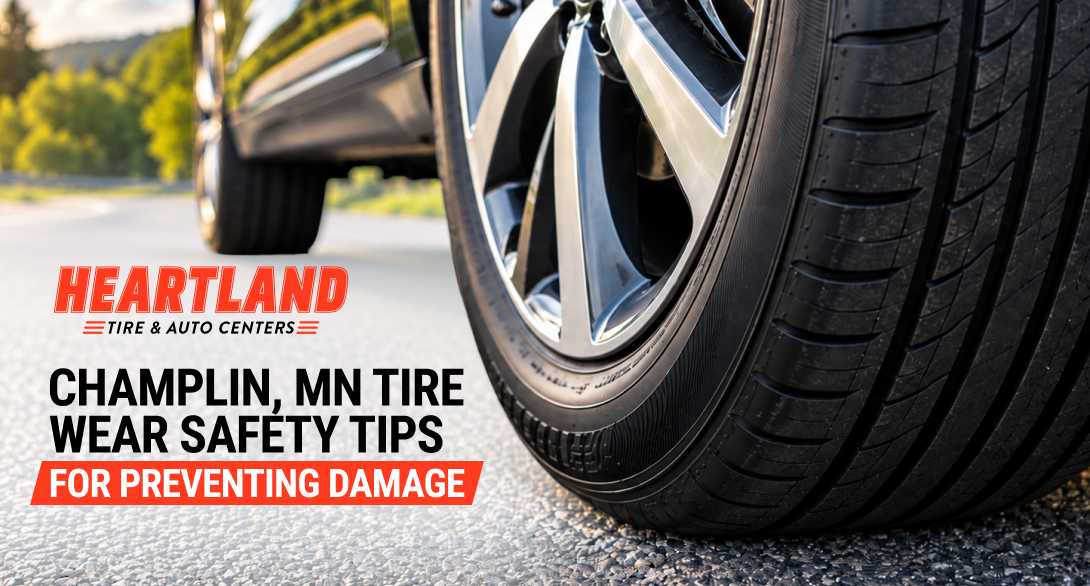
Your tires can tell you a surprising amount about your vehicle. Uneven tread, worn edges, vibration, or a tire that keeps losing air can indicate problems that warrant attention before they lead to expensive repairs or safety concerns. For drivers looking for Champlin MN Tire Wear Safety Tips, the goal is simple: recognize the warning signs early and know what to do next.
For local car owners, SUV drivers, and first-time vehicle owners, regular tire checks are one of the easiest ways to protect your vehicle. Proper inflation, good alignment, regular rotation, and adequate tread all contribute to safer handling and longer tire life.
Champlin roads also expose vehicles to changing weather, potholes, road debris, and temperature swings. These conditions can affect how tires wear over time, making routine inspections especially valuable.
TL;DR: Champlin MN Tire Wear Safety Tips
- Champlin MN Tire Wear Safety Tips start with checking tread depth and looking for unusual wear patterns.
- Check tire pressure when the tires are cold and follow the pressure listed by your vehicle manufacturer.
- Uneven wear can point to alignment, suspension, balancing, or inflation problems.
- Tires at 2/32 of an inch of tread are generally considered worn out, while many tire professionals recommend planning replacement sooner, around 4/32 of an inch.
- If you notice vibration, pulling, cracks, bulges, repeated air loss, or severe tread wear, schedule a professional inspection.
What Causes Tire Wear in Champlin MN?
Understanding tire wear in Champlin MN starts with knowing that tires rarely wear unevenly for no reason.
Normal wear happens gradually as the tread meets the road. However, certain mechanical or maintenance problems can cause one section of the tire to wear much faster than another.
Common causes include:
- Incorrect tire pressure
- Poor wheel alignment
- Worn suspension components
- Improper wheel balance
- Failure to rotate tires
- Aggressive acceleration or braking
- Heavy vehicle loads
- Potholes and road impacts
- Damaged wheels
- Normal age and mileage
Michelin explains that underinflation can cause greater wear along both outer edges, while overinflation can increase wear through the center of the tread. Wear concentrated along one edge can indicate alignment or suspension problems.
That means your tires can function as an early warning system. If the tread pattern suddenly changes, do not assume the tires themselves are the only problem.
How Can You Tell If Your Tires Are Wearing Unevenly?
One of the most useful Champlin MN Tire Wear Safety Tips is to look at all four tires rather than checking only the tire that is easiest to see.
Turn the steering wheel slightly when checking the front tires so you can see more of the tread and inner edge.
Look for these patterns:
- Wear on Both Outside Edges
If both shoulders of the tread appear more worn than the center, the tire may have been operating with insufficient air pressure.
Low pressure allows more of the tire’s outer tread to contact the road. It can also increase rolling resistance and heat buildup.
Check the pressure with a reliable gauge when the tires are cold. Use the vehicle manufacturer’s recommended pressure rather than the maximum pressure printed on the tire sidewall.
-
Wear Down the Center
A tire that wears heavily through the center may have been overinflated.
Overinflation can reduce the amount of tread contacting the road and may affect handling and ride comfort.
Do not automatically lower the pressure to make the tire “look right.” Always follow the vehicle manufacturer’s recommended cold inflation pressure.
-
Wear on One Edge
If the inside or outside edge of a tire wears much faster than the rest of the tread, alignment or suspension problems may be involved.
A vehicle that pulls to one side, has a crooked steering wheel while driving straight, or develops unusual tire wear deserves an inspection.
-
Patchy or Cupped Wear
Scalloped or cupped tread sections can indicate wheel balance, suspension, or tire-related problems.
If you can feel repeated high and low spots when running your hand lightly across the tread, have the tire and suspension checked.
-
Feathered Tread
Run your fingers gently across the tread blocks. If one edge of each tread block feels noticeably sharper than the other, the tire may have feathering.
This can be associated with alignment problems and should be investigated rather than simply ignored.
How Much Tire Tread Is Safe?
One of the most important tire safety in Champlin MN questions is knowing when tread has become too shallow.
In the United States, 2/32 of an inch is generally the legal wear limit used by most states. Tire manufacturers also build tread-wear indicators into tires at approximately this depth.
However, legal minimum and ideal safety are different questions.
Pirelli notes that many tire professionals consider 4/32 of an inch an important replacement threshold because traction and stopping performance can decrease substantially as tread becomes shallow, particularly on wet or snowy roads.
A useful rule of thumb is:
- 6/32 inch or more: Generally good tread remaining
- Around 4/32 inch: Start planning for replacement, especially before demanding weather
- 2/32 inch: Tire is at the commonly recognized minimum and should be replaced
- Below 2/32 inch: Unsafe and beyond the typical legal limit
A tread-depth gauge provides a more precise measurement than simply looking at the tread.
Can You Check Tire Tread at Home?
Yes. A quick visual check can help you catch problems between professional inspections.
The traditional penny test can help identify tires approaching the 2/32-inch threshold. Insert a penny into a major tread groove with Lincoln’s head facing down. If you can see the top of his head, the tread is approximately 2/32 of an inch or less.
For better accuracy, use a tire tread-depth gauge.
Check several points across each tire rather than measuring one spot. This matters because a tire can have acceptable tread in one area and dangerously low tread somewhere else.
For tire maintenance in Champlin MN, make this a quick monthly habit. It takes only a few minutes and can reveal a problem before you feel it from behind the wheel.
Why Is Tire Pressure Important for Tire Wear?
Correct inflation is one of the simplest ways to promote even tread wear.
Underinflated tires can flex more than intended, while overinflated tires can change the shape of the contact patch. Both conditions can affect tread wear and vehicle handling.
Use these tire maintenance in Champlin MN habits:
- Check pressure when tires are cold.
- Use a reliable pressure gauge.
- Check all four tires.
- Do not forget the spare if your vehicle has one.
- Follow the pressure listed on the driver’s door-jamb label or owner’s manual.
- Check pressure more frequently when temperatures change significantly.
Your TPMS warning light is useful, but it should not replace manual pressure checks. Heartland Tire & Auto Centers explains that a TPMS warning can indicate low pressure, a slow leak, or another issue requiring diagnosis.
If the light repeatedly comes back after adding air, investigate the cause instead of repeatedly resetting or ignoring it.
When Does Uneven Tire Wear Mean You Need an Alignment?
Alignment is another major factor in tire wear in Champlin MN.
Your vehicle’s wheels need to point and track at specific angles. If those angles move outside the manufacturer’s specifications, the tire can drag against the road instead of rolling evenly.
Watch for:
- Steering wheel that sits crooked
- Vehicle pulling left or right
- Uneven inside-edge wear
- Uneven outside-edge wear
- Steering that feels different after hitting a pothole
- Tires wearing faster than expected
Alignment problems can develop after impacts with potholes, curbs, or other road hazards. They can also develop as steering and suspension components wear.
Heartland Tire & Auto Centers recommends wheel alignment to help prevent uneven wear and says its alignment service checks steering and suspension components as well as camber, caster, and toe angles.
Does Tire Rotation Prevent Uneven Wear?
Regular rotation helps distribute the work among your tires.
Front and rear tires can experience different forces depending on the vehicle’s drivetrain, weight distribution, steering, and driving habits. Without rotation, one pair may wear considerably faster.
Your owner’s manual should provide the recommended rotation pattern and interval because the correct pattern can vary by vehicle and tire type.
Rotation cannot correct an existing alignment or suspension problem. It also cannot make a damaged tire safe.
Think of rotation as preventative maintenance rather than a cure for abnormal wear.
What Tire Damage Should You Never Ignore?
Some tire problems require immediate attention.
A professional tire inspection in Champlin MN is especially important if you notice:
- A bulge or blister on the sidewall
- Deep cuts or cracks
- Exposed cords
- Severe tread separation
- A nail or screw in the tread
- Repeated loss of air
- Strong vibration
- A sudden change in handling
- Tire pressure that keeps dropping
A sidewall bulge is particularly concerning because it can indicate internal structural damage. Heartland Tire & Auto Centers notes that sidewall damage generally cannot be safely patched and requires evaluation for replacement.
If a tire has a nail or screw stuck in it, avoid pulling the object out yourself. Removing it can allow air to escape rapidly. Have the tire evaluated to determine whether a proper repair is possible.
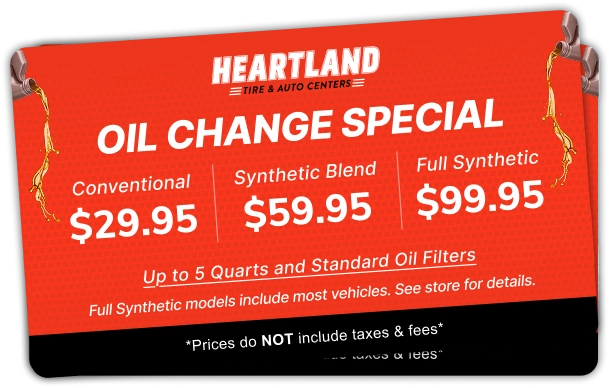
Real Savings
Heartland Values
Claim Yours and Book
An Appointment
How Does Champlin Weather Affect Tire Wear?
Minnesota drivers deal with more than ordinary dry-road driving.
Cold temperatures can reduce tire pressure, while seasonal temperature changes can make pressure fluctuate. Winter conditions also expose vehicles to snow, ice, road salt, potholes, and rough road surfaces.
Summer brings its own challenges. Hot pavement, long drives, heavy loads, and low tire pressure can increase tire stress.
These conditions make tire safety in Champlin MN a year-round responsibility.
Before a long summer trip, check pressure, tread depth, spare-tire condition, and visible damage. Before winter, inspect the tires again and consider whether the remaining tread is appropriate for the conditions you expect to encounter.
Do not wait for the first major snowstorm to discover that your tires are already worn.
How Can SUV Drivers Prevent Tire Wear?
SUV owners should pay close attention to tire condition because SUVs can carry more weight and may be used for longer trips, family transportation, or hauling.
Start with the vehicle manufacturer’s recommended tire size and inflation pressure.
Avoid exceeding the vehicle’s load rating, and remember that adding passengers or cargo does not mean you should randomly increase tire pressure beyond the manufacturer’s recommendation.
For SUV drivers, tire inspection in Champlin MN should also include checking all four tires for differences in tread depth.
This is especially important for all-wheel-drive vehicles. Depending on the vehicle manufacturer’s requirements, significantly different tire diameters or tread depths can affect the drivetrain.
When replacing tires, ask a qualified technician whether replacing one tire, two tires, or a complete set is appropriate for your vehicle.
What Should First-Time Car Owners Check?
If you are a first-time car owner, tire care can feel more complicated than it really is.
Start with five simple habits:
- Check tire pressure regularly.
- Look at the tread every few weeks.
- Rotate tires according to the vehicle manufacturer’s schedule.
- Pay attention to vibration, pulling, and unusual noises.
- Have unfamiliar tire problems professionally inspected.
You do not need to become a tire expert overnight.
Learning a few basic signs can help you recognize when something deserves attention. A small issue found early can sometimes be easier and less expensive to address than a problem discovered after a tire fails.
When Should You Schedule a Professional Tire Inspection?
A professional tire inspection in Champlin MN makes sense whenever you notice something you cannot confidently explain.
You should also consider an inspection after hitting a major pothole or curb, before an extended road trip, when installing new tires, or when the vehicle begins pulling or vibrating.
At Heartland Tire & Auto Centers, technicians inspect tires and other important vehicle components and provide clear recommendations based on what they find. The company has a Champlin location at 11438 Jefferson Court and provides tire, alignment, inspection, and other automotive services.
The important part is getting an answer before a small warning sign turns into a roadside emergency.
Champlin MN Tire Wear Safety Tips for Safer Driving
The most effective Champlin MN Tire Wear Safety Tips are simple: check your pressure, monitor tread depth, look for uneven wear, rotate your tires, and pay attention to changes in handling.
Your tires are your vehicle’s connection to the road. When they are properly inflated, evenly worn, and in good condition, they can provide the traction and stability your vehicle needs.
For tire safety in Champlin MN, prevention is usually easier than reacting to a tire failure.
If you are seeing uneven tread, repeated air loss, vibration, pulling, or visible tire damage, let a professional take a closer look. Heartland Tire & Auto Centers can inspect your tires and help you understand whether you need a simple maintenance service, an alignment, a repair, or replacement.
If your tires have developed unusual wear or you simply want peace of mind before your next commute or road trip, schedule a professional inspection with Heartland Tire & Auto Centers.