



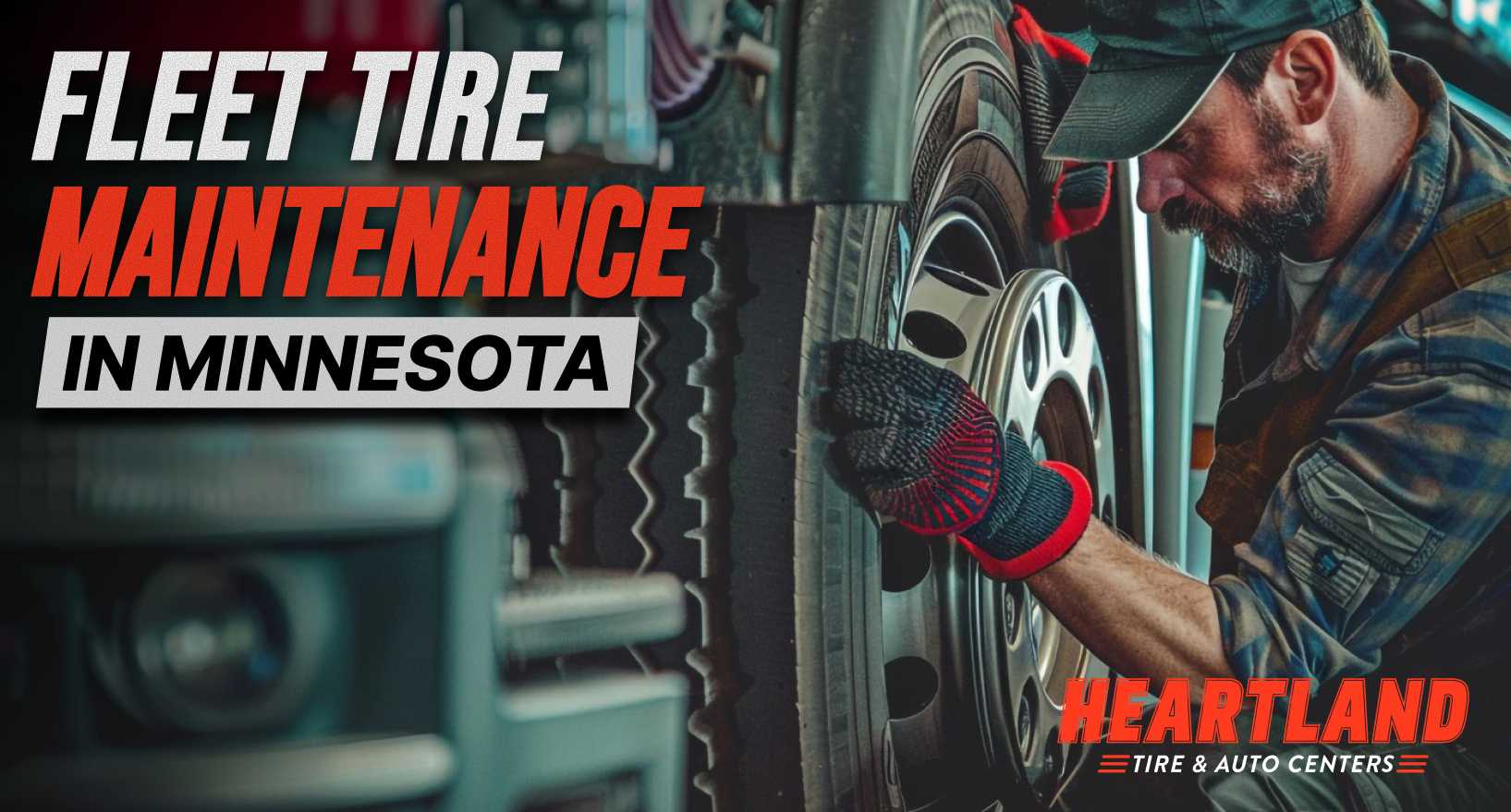
Managing a fleet in Minnesota comes with unique challenges. From freezing winter temperatures and snow-packed roads to potholes that appear after spring thaw, tires take a constant beating. Whether you oversee a commercial fleet, family-owned service vehicles, SUVs, or company cars, having a structured tire maintenance program can help reduce downtime, improve safety, and lower long-term operating costs.
For fleet managers and vehicle owners alike, fleet tire maintenance in Minnesota should account for seasonal weather changes, road conditions, and manufacturer recommendations. A proactive approach often prevents costly roadside breakdowns and significantly extends tire life.
TL;DR – Fleet Tire Maintenance Minnesota Key Takeaways
- Fleet tire maintenance in Minnesota programs should include monthly pressure checks, tread inspections, and seasonal evaluations.
- Regular tire inspections for Minnesota fleets help identify wear issues before they become costly repairs.
- A preventive tire maintenance program in Minnesota can improve fuel efficiency and reduce downtime.
- Tire rotation services for fleet vehicles should be performed according to manufacturer recommendations and driving conditions.
- Winter tire management for Minnesota vehicles is essential for maintaining traction and safety during harsh weather.
Why Fleet Tire Maintenance Matters in Minnesota
Minnesota drivers face some of the toughest road conditions in the country. Extreme temperature swings can affect tire pressure, while snow, ice, and potholes accelerate wear. These factors make tire maintenance one of the most important parts of a fleet management strategy.
According to industry fleet maintenance studies, underinflated tires can increase rolling resistance and fuel consumption while accelerating tread wear. Consistent inspections and pressure monitoring help reduce these risks.
For businesses, neglected tires often lead to:
- Increased fuel costs
- Unexpected downtime
- Reduced vehicle safety
- Premature tire replacement
- Higher maintenance expenses
At Heartland Tire & Auto Centers, technicians regularly help Minnesota drivers identify tire issues before they develop into expensive repairs.
What Is Fleet Tire Maintenance
Fleet tire maintenance refers to the ongoing process of inspecting, servicing, rotating, repairing, and replacing tires to ensure safe and efficient vehicle operation.
A complete fleet tire maintenance in Minnesota includes:
- Tire pressure monitoring
- Tread depth measurement
- Tire rotations
- Wheel alignments
- Balancing services
- Seasonal tire inspections
- Damage assessments
When these tasks are completed consistently, fleets experience fewer breakdowns and longer tire life.
Fleet Tire Maintenance Minnesota Monthly Checklist
A structured checklist helps ensure nothing gets overlooked. This checklist can be used for commercial fleets, SUVs, and company vehicles throughout Minnesota.
Tire Pressure Inspection
Checking pressure is one of the simplest yet most valuable maintenance tasks.
- Check cold tire pressure – Tire pressure should be measured before driving for accurate readings.
- Adjust for seasonal temperatures – Minnesota temperature swings can significantly affect PSI levels.
- Inspect all tires – Include spare tires whenever applicable.
- Follow manufacturer specifications – Use vehicle-specific recommendations rather than generic targets.
- Document readings – Tracking trends helps identify slow leaks early.
Even small pressure variations can impact handling, tire wear, and fuel economy. Creating a routine inspection schedule helps maintain consistency across the fleet.
Tread Depth Monitoring
Tread depth directly affects traction, especially during Minnesota winters.
- Measure every tire – Use a tread depth gauge rather than visual estimates.
- Check inner and outer tread areas – Uneven wear may indicate alignment issues.
- Monitor seasonal performance – Winter driving requires adequate tread for snow and ice traction.
- Track wear patterns – Consistent records reveal emerging problems.
- Replace tires proactively – Avoid waiting until tread reaches unsafe levels.
A proactive replacement strategy reduces the risk of weather-related incidents and keeps vehicles operating safely year-round.
Visual Tire Inspection
Regular tire inspections for Minnesota fleets should include a thorough visual review.
- Look for sidewall cracks – Temperature fluctuations can contribute to rubber deterioration.
- Inspect for punctures – Nails and road debris are common causes of tire damage.
- Check for bulges – Sidewall bulges may indicate internal structural damage.
- Identify uneven wear – Cupping and feathering often signal suspension or alignment issues.
- Remove embedded debris – Small stones can sometimes lead to larger problems.
Visual inspections take only a few minutes but often reveal issues that pressure checks alone cannot detect.
Wheel Alignment Evaluation
Minnesota roads frequently create alignment challenges due to potholes and rough surfaces.
- Watch for steering pull – Vehicles drifting left or right often need alignment service.
- Check tire wear patterns – Uneven wear commonly points to alignment issues.
- Inspect after pothole impacts – Severe impacts can alter alignment settings.
- Monitor fuel efficiency changes – Poor alignment increases rolling resistance.
- Schedule periodic inspections – Preventive alignment checks save money over time.
Proper alignment protects tires while improving handling and ride quality.
Tire Rotation Scheduling
Tire rotation services for fleet vehicles help ensure even tread wear across all positions.
- Rotate at recommended intervals – Follow manufacturer guidelines whenever possible.
- Use appropriate rotation patterns – Vehicle type determines the correct procedure.
- Inspect tires during rotation – This creates another opportunity to catch wear issues.
- Track rotation history – Documentation supports long-term tire management.
- Evaluate replacement timing – Rotation records help predict future tire needs.
A well-planned rotation schedule often adds thousands of miles to tire life.
Seasonal Tire Maintenance in Minnesota
Minnesota’s climate requires a seasonal approach to tire care.
Winter Tire Management for Minnesota Vehicles
Winter driving places significant demands on tires.
- Inspect tread before snowfall – Adequate depth improves traction.
- Monitor pressure frequently – Cold temperatures reduce PSI.
- Consider dedicated winter tires – Fleets operating daily may benefit from seasonal tire sets.
- Check for ice-related damage – Frozen road debris can affect tire integrity.
- Review emergency equipment – Prepare vehicles for severe weather conditions.
Winter tire management for Minnesota vehicles becomes especially important for fleets operating in northern and rural areas.
Spring and Summer Maintenance
After winter, vehicles should undergo a detailed inspection.
- Check for pothole damage – Spring roads often create alignment issues.
- Inspect wheels and rims – Hidden damage may develop during the winter months.
- Evaluate tread wear – Winter conditions can accelerate deterioration.
- Balance tires if needed – Vibrations often indicate balance concerns.
- Review maintenance records – Identify recurring issues requiring attention.
Spring inspections often reveal concerns that developed gradually over the winter.
Common Tire Problems Minnesota Fleet Managers Face
Understanding common problems helps managers respond quickly and effectively.
- Uneven Tire WearUneven tire wear is often caused by several underlying issues, including improper tire inflation, wheel alignment problems, suspension system wear, inconsistent tire rotation schedules, and excessive vehicle loading.When tires do not wear evenly, their lifespan can be significantly reduced, leading to more frequent replacements and higher operating costs. Identifying and correcting these issues early helps improve tire performance, enhance vehicle safety, and prevent unnecessary tire replacement expenses across the fleet.
- Frequent Tire Pressure ChangesTemperature swings in Minnesota can create significant pressure fluctuations. A preventive tire maintenance program in Minnesota should include more frequent pressure checks during seasonal transitions when temperatures change rapidly.
- Pothole DamageMinnesota’s annual freeze-thaw cycle is a major contributor to pothole formation, creating challenging road conditions for fleet vehicles and everyday drivers alike. When vehicles hit potholes, the impact can cause a variety of problems, including sidewall damage, bent wheels, wheel misalignment, suspension wear, and even tire punctures. While some damage is immediately noticeable, other issues may develop gradually and affect vehicle handling, tire wear, and overall safety. Scheduling a tire and suspension inspection after a significant pothole impact can help identify hidden damage early and prevent more costly repairs down the road.
How Often Should Fleet Tires Be Inspected
This is one of the most common questions fleet managers ask. Establishing a consistent inspection schedule helps identify tire issues early, reduces unexpected downtime, and supports a more effective preventive tire maintenance program in Minnesota. The following schedule provides a practical framework for keeping fleet tires in optimal condition throughout the year.
| Inspection Frequency | Recommended Checks |
|---|---|
| Daily Checks | Visual tire condition review, obvious damage assessment, and low-pressure identification. |
| Monthly Checks | Tire pressure verification, tread depth measurement, and wear pattern inspection. |
| Quarterly Checks | Alignment evaluation, tire rotation services for fleet vehicles, and a comprehensive tire condition review. |
| Seasonal Checks | Winter preparation inspections, spring recovery assessments, and tire replacement planning based on wear and performance. |
Industry maintenance programs consistently recommend structured inspection intervals to minimize the risk of breakdowns, improve fleet reliability, and extend tire service life. Following a documented schedule also makes it easier to track tire performance trends and plan maintenance expenses more effectively.
Expert Tire Maintenance Tips from Minnesota Professionals
Experienced technicians often follow several best practices that improve tire performance.
1. Build a Preventive Maintenance Culture
Encourage drivers to report issues immediately rather than waiting for scheduled service. Many costly repairs begin as small, easily corrected concerns.
2. Track Tire Performance Data
Document:
- Mileage
- Rotations
- Pressure readings
- Repairs
- Replacement dates
Historical data helps identify trends and improve future decision-making.
3. Don’t Ignore Small Wear Patterns
Minor irregular wear frequently signals larger mechanical issues developing beneath the surface.
4. Schedule Seasonal Inspections
Minnesota weather changes rapidly. Seasonal inspections help prepare vehicles for upcoming conditions while identifying existing concerns.
5. Partner with Experienced Tire Professionals
Professional inspections often uncover issues that may not be visible during routine fleet checks.
At Heartland Tire & Auto Centers, technicians provide comprehensive tire inspections, maintenance services, and recommendations tailored to Minnesota driving conditions.
Why Choose Heartland Tire & Auto Centers for Fleet Tire Maintenance in Minnesota
Managing fleet vehicles requires dependable service and expert guidance. Heartland Tire & Auto Centers serves drivers across Minnesota with locations in Brainerd, Brooklyn Park, Burnsville, Champlin, Eagan, Monticello, Ramsey, Savage, Shakopee, Spring Lake Park, and West Bloomington.
Whether you manage a business fleet, operate company SUVs, or simply want dependable tire care for multiple vehicles, the team understands the challenges Minnesota roads create.
Services include:
- Tire inspections
- Tire rotations
- Wheel alignments
- Tire replacement
- Preventive maintenance
- Seasonal tire services
Real Savings
Heartland Values
Claim Yours and Book
An Appointment

Fleet Tire Maintenance Minnesota and Heartland Tire & Auto Centers
A successful fleet tire maintenance in Minnesota depends on consistency, documentation, and proactive inspections. Minnesota’s weather and road conditions create unique challenges that demand a structured maintenance approach. By monitoring tire pressure, checking tread depth, scheduling rotations, and addressing alignment concerns early, fleet managers can improve safety while controlling operating costs.
Ready to improve your fleet’s tire performance and reliability? Schedule an appointment with Heartland Tire & Auto Centers today and let our experienced technicians create a maintenance plan tailored to your vehicles and Minnesota driving conditions.
Book online: https://takeittoheartlandtire.com/request-appointment/