


Temperature changes can affect your tires, fuel costs, and driving safety, even when your tires look perfectly normal. Understanding how temperature affects tire pressure helps you spot pressure changes early, maintain proper inflation, and avoid unnecessary fuel consumption.
For drivers across Minnesota, changing seasons make tire pressure checks especially important. Cold mornings can trigger a tire pressure warning, while warmer afternoons and extended highway driving can cause readings to rise. Knowing which changes are normal and when to investigate a problem helps you care for your car or SUV with confidence.
TL;DR on How Temperature Affects Tire Pressure
- Cold temperatures lower tire pressure. Air pressure typically drops by about 1 PSI for every 10°F decrease in temperature, although actual changes vary.
- Warm temperatures increase tire pressure. Air expands as it warms, so readings often rise after driving or during warmer weather.
- Incorrect pressure can hurt fuel economy. Underinflated tires create more rolling resistance, making the engine work harder to move the vehicle.
- Check pressure when tires are cold. Measure before driving or after the vehicle has been parked for several hours, and follow the manufacturer’s recommended PSI.
- Do not ignore recurring warning lights. Temperature can explain a pressure drop, but a puncture, leaking valve, or other issue may also be responsible.
How Temperature Affects Tire Pressure
Tire pressure changes because the air inside your tires responds to temperature. When the air cools, its pressure decreases. When it warms, its pressure increases, assuming the tire’s volume remains relatively stable.
A common rule of thumb is that tire pressure changes by approximately 1 PSI for every 10°F change in air temperature. This is an estimate, not a precise formula for every tire or driving condition.
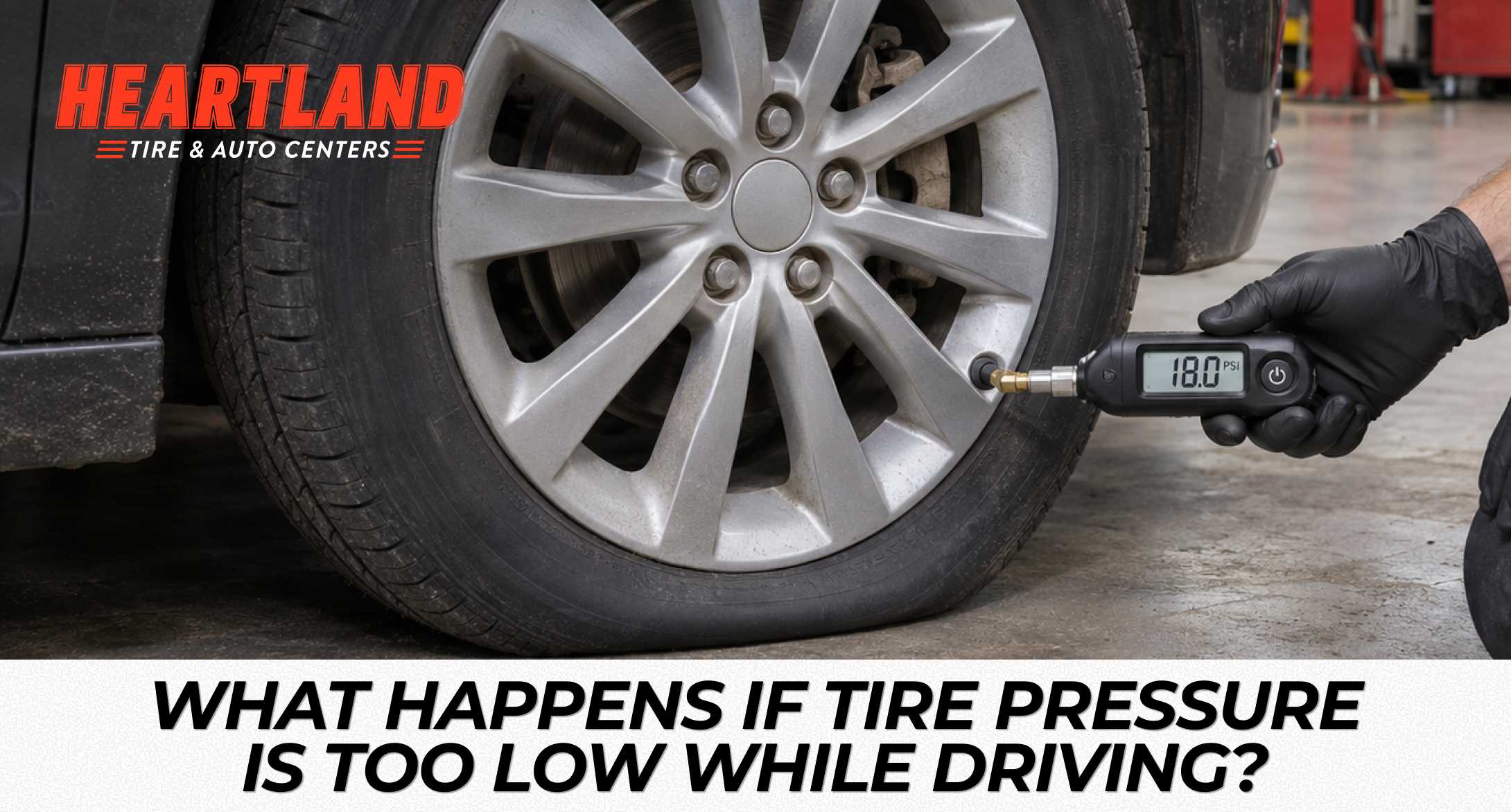
Consider a vehicle with tires inflated to 35 PSI on a mild 70°F morning. If the temperature falls to 30°F, the pressure could decrease by around 4 PSI, potentially leaving the tires underinflated. The actual reading depends on starting conditions, tire temperature, sunlight, and other factors.
This matters because tire pressure affects how the tread contacts the road, how the vehicle handles, and how efficiently the tires roll.
Why does cold weather cause tire pressure to drop
During Minnesota’s fall and winter months, overnight temperature drops can cause tire pressure to drop below the vehicle manufacturer’s recommended level. You might notice a warning light when starting your car, even if the tires were properly inflated a few days earlier.
Tire pressure in cold weather deserves particular attention during the first sustained cold snap of the season. A tire that was correctly inflated during a mild afternoon may be several PSI lower after a much colder night.
Cold weather does not automatically mean a tire is damaged. However, a low reading still needs attention. Measure the pressure with a gauge and add air to the manufacturer’s specified level when the tires are cold.
How hot weather affects tire pressure
Warm air increases tire pressure, and driving further heats the tires through repeated flexing and contact with the road. As a result, your gauge may show a higher reading after a highway trip than it did before you left home.
Tire pressure in hot weather should be checked using the same cold-tire procedure recommended by your vehicle manufacturer. Do not release air simply because the reading rises after driving. That increase is generally expected, and reducing pressure while the tire is hot can leave it underinflated once it cools.
High temperatures also make tire condition important. Damaged, worn, overloaded, or underinflated tires can generate excessive heat during use, increasing the risk of tire failure.
How Tire Pressure Affects Fuel Economy
Temperature affects fuel economy partly through its influence on tire pressure. When tires fall below the recommended PSI, their sidewalls flex more as they roll. That extra deformation increases rolling resistance, meaning the engine must expend more energy to keep the vehicle moving.
Keeping tires correctly inflated helps limit this avoidable energy loss. Michelin identifies tire pressure as one factor affecting rolling resistance, fuel consumption, and tire performance.
The connection between low tire pressure and fuel economy
Low tire pressure and fuel economy are closely linked because underinflated tires require more energy to roll. The difference may not be obvious on a single trip, but consistently driving with low pressure can increase fuel consumption over time.
Underinflation can also affect steering response, braking performance, and tread life. Correcting it helps protect your tires while supporting more efficient driving.
Still, tire pressure is only one part of fuel economy. Cold engine starts, idling, traffic, road conditions, vehicle load, and driving habits can all influence how much fuel your car or SUV uses. A pressure adjustment may help, but it will not eliminate every seasonal change in mileage.
Does proper tire pressure save gas in winter?
Yes, maintaining the recommended pressure can help reduce unnecessary rolling resistance during winter. However, you may still notice lower fuel economy in cold weather because engines take longer to reach operating temperature, winter fuel formulations can differ, and slippery roads may require different driving behavior.
For better results, check pressure regularly, avoid unnecessary idling, remove excess cargo, and keep up with routine vehicle maintenance. Use fuel economy readings over several comparable trips rather than judging results from a single commute.
What Is the Recommended Tire Pressure for Your Vehicle?
The correct PSI depends on your vehicle, tire configuration, and sometimes the load you are carrying. There is no single pressure that works for every passenger car, SUV, or light truck.
The recommended tire pressure for your vehicle is usually printed on a placard inside the driver’s door jamb. You may also find it in the owner’s manual or, for some vehicles, near the fuel door. Use the manufacturer’s specifications for normal driving and any separate guidance for heavier loads.
Do not mistake the maximum pressure printed on the tire sidewall for the vehicle’s recommended operating pressure. These figures serve different purposes.
How to check tire pressure correctly
You can check tire pressure at home with a reliable gauge or at a service station. Follow these steps for a useful reading.
- Park and let the tires cool. Ideally, check before driving or after the vehicle has been stationary for several hours.
- Find the correct PSI. Read the driver’s door placard or owner’s manual instead of guessing.
- Remove the valve cap. Keep it in a clean place while you measure the tire.
- Press the gauge onto the valve stem. Make a firm seal to avoid air leakage during reading.
- Compare the reading with the specification. Check every tire, including the spare, if applicable.
- Add air when needed. Inflate to the specified cold pressure, then measure again.
- Replace the valve caps. These help keep dirt and moisture away from the valve.
Check the front and rear tires separately because their specified pressures may differ. Also, do not rely on appearance alone. A tire can be underinflated without looking flat.
When Should You Check Tire Pressure in Minnesota?
Monthly checks are a useful baseline, but seasonal transitions and significant temperature swings deserve extra attention. Heartland drivers may see pressure readings change as temperatures move from mild fall afternoons to freezing winter mornings.
Check your tires before a long trip and whenever the TPMS warning appears. You should also inspect them after hitting a pothole or noticing unusual handling, even if the dashboard shows no warning.
Situations that call for a tire pressure check
- The first cold mornings of fall – Check all four tires when overnight temperatures begin dropping. Pressure that was correct during warmer weather may now be below specification.
- A sudden winter temperature drop – Measure pressure before driving and inflate any tire that falls below the recommended level.
- The arrival of spring – Recheck your tires as temperatures rise. Do not assume pressure will automatically return to the correct level.
- Before a long highway trip – Correct inflation supports predictable handling and helps reduce avoidable rolling resistance.
- After a TPMS warning – Use a gauge to check each tire rather than assuming the temperature is the only cause.
- After carrying heavy cargo – Follow the vehicle manufacturer’s pressure guidance for the load, if different from the standard setting.
These checks are especially helpful for SUVs and family vehicles that carry passengers, sports equipment, groceries, or vacation luggage. Keeping an accurate record of pressure readings can also help you recognize a tire that repeatedly loses air.
Real Savings
Heartland Values
Claim Yours and Book
An Appointment
What Does the Tire Pressure Warning Light Mean?
The Tire Pressure Monitoring System, commonly called TPMS, alerts you when one or more tires have pressure below the system’s warning threshold. A cold morning may trigger the light because lower temperatures reduce pressure inside the tires.
However, the light cannot tell you exactly why the pressure has fallen. A puncture, a leaking valve, a damaged wheel, or natural air loss may also be responsible.
What to do when the TPMS light comes on
- Check your tires as soon as it is safe. Look for a visibly flat tire, puncture, bulge, or other damage.
- Measure all four tires. A gauge gives you a more useful reading than a visual inspection.
- Inflate to the manufacturer’s specification. Use the cold-pressure recommendation rather than the maximum pressure listed on the tire.
- Watch for recurring pressure loss. If one tire keeps dropping, arrange an inspection for a possible leak.
- Get help if the light remains on. A persistent warning may indicate continued pressure loss or a TPMS fault.
If a tire is visibly flat or badly damaged, avoid driving on it. If the warning light flashes before remaining illuminated, your vehicle may have a TPMS system fault, depending on the model. Check the owner’s manual for the correct interpretation.
A temperature-related warning is common, but it should never be dismissed without checking the actual pressure. Proper inflation supports safe handling and helps prevent avoidable tire damage.
Keep Your Tires Ready for Minnesota Roads With Heartland Tire & Auto Centers
Understanding how temperature affects tire pressure helps you make informed decisions about tire care in every season. Cold weather can lower pressure; warmer conditions and driving can raise readings, and incorrect inflation can affect handling, tread life, and fuel economy.
Heartland Tire & Auto Centers helps drivers across its Minnesota service areas maintain their vehicles as road and weather conditions change. If your tires keep losing pressure, your TPMS warning returns, or you notice uneven wear, a professional inspection can help determine whether the issue comes from temperature, a leak, or another tire problem.
Keep the recommended tire pressure for your vehicle in mind, check your tires regularly, and avoid making adjustments based on guesswork. These simple habits can help you maintain dependable handling and reduce preventable tire wear.
Do not wait for a recurring warning light or an unexpected tire problem to check your tires. Contact Heartland Tire & Auto Centers to arrange a tire inspection and get help identifying pressure loss, uneven wear, or other concerns.
Visit the Heartland Tire & Auto Centers appointment request page to schedule service.