



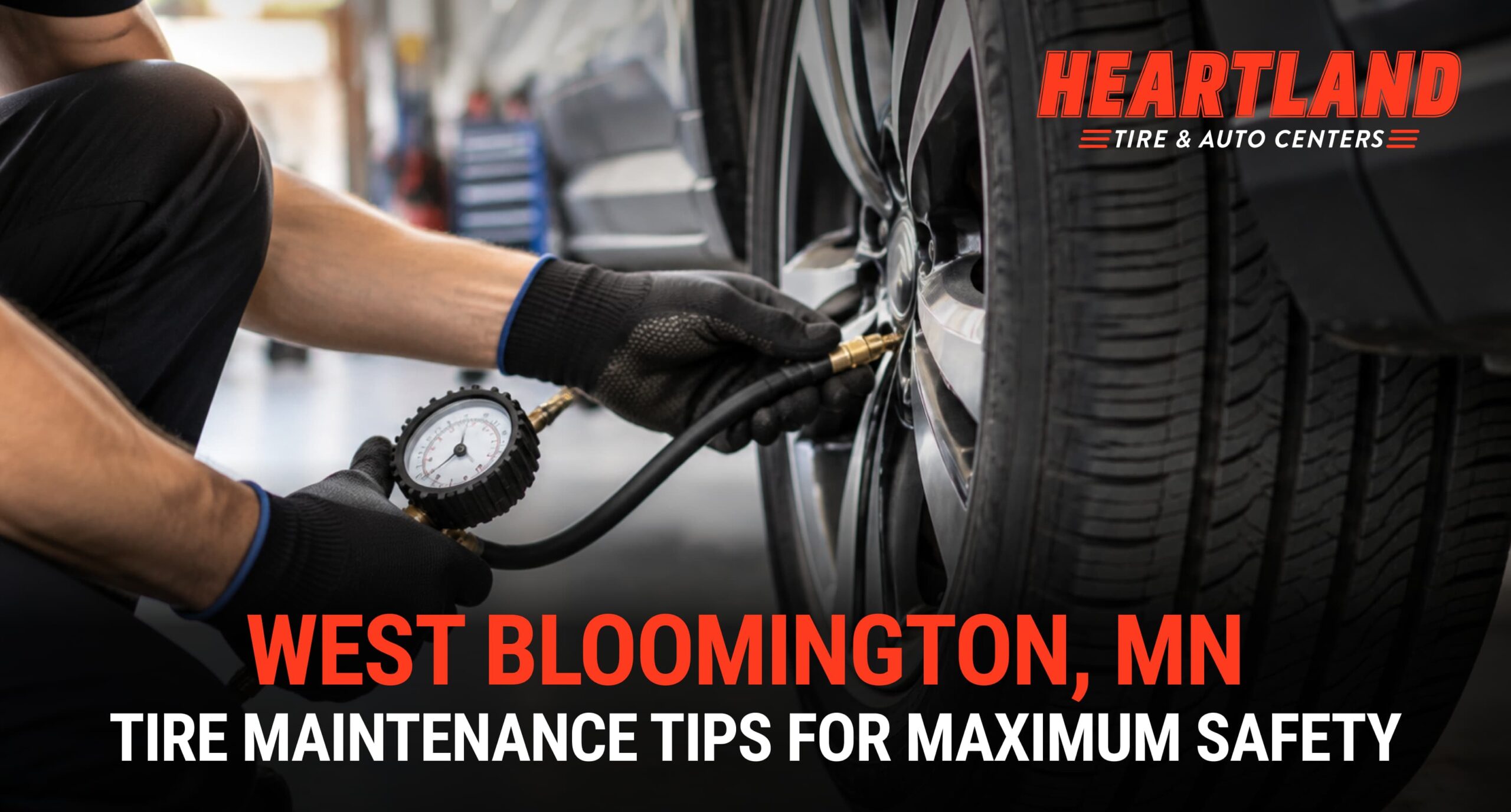
Your tires are the only part of your vehicle that touches the road, making them essential for safe driving. Whether you’re commuting through West Bloomington or heading out on a Minnesota road trip, properly maintained tires improve braking, handling, fuel efficiency, and overall safety.
Many drivers wait until a warning light appears or tire wear becomes obvious before taking action. Following these West Bloomington MN tire maintenance tips year-round helps extend tire life, prevent costly repairs, and keep your vehicle performing at its best. With Minnesota’s changing seasons affecting tire pressure and traction, the team at Heartland Tire & Auto Centers recommends making tire inspections a regular part of your maintenance routine.
TL;DR: West Bloomington MN Tire Maintenance Tips
- West Bloomington MN Tire Maintenance Tips begin with checking your tires every month for proper inflation, tread wear, and visible damage.
- Maintaining the correct tire pressure for Minnesota weather improves safety, fuel economy, and tire life throughout the year.
- Scheduling regular tire rotation in West Bloomington helps your tires wear evenly and extends their usable lifespan.
- Learning how to check tire tread depth can help you recognize when it’s time for new tires before safety becomes a concern.
- Following seasonal tire care in Minnesota prepares your vehicle for changing road conditions and unpredictable weather.
Why West Bloomington MN Tire Maintenance Tips Matter Year Round
Many drivers assume tire maintenance only becomes important before winter. While snow and ice certainly demand extra attention, your tires work hard every day regardless of the season.
During August, for example, pavement temperatures can climb well above outside air temperatures. Heat increases the stress placed on your tires, especially during highway driving. Combined with long family road trips, construction zones, and occasional summer storms, these conditions make regular inspections even more valuable.
At the same time, drivers should pay close attention to tire pressure for Minnesota weather because even moderate temperature changes can affect inflation levels. According to the National Highway Traffic Safety Administration, tires naturally lose about 1 PSI for every 10°F drop in temperature, making routine pressure checks an essential part of vehicle safety.
When local drivers follow consistent West Bloomington MN tire maintenance tips, they often experience several benefits beyond improved safety.
- Better braking performance – Properly maintained tires provide stronger contact with the road, helping reduce stopping distances during emergency braking.
- Longer tire lifespan – Regular inspections and maintenance help prevent uneven wear that can shorten tire life by thousands of miles.
- Improved fuel economy – Correct tire pressure for Minnesota weather reduces rolling resistance, allowing your engine to work more efficiently.
- More comfortable driving – Balanced, properly inflated tires create a smoother ride while reducing unnecessary vibration.
- Lower repair costs – Catching small problems early often prevents expensive tire replacements or suspension repairs later.
These benefits become even more noticeable over several years of vehicle ownership. A few minutes spent checking your tires each month can save hundreds of dollars while helping you avoid roadside emergencies.
How Often Should You Inspect Your Tires?
One of the most common questions mechanics hear is whether monthly inspections are really necessary.
The answer is yes.
Even if your vehicle feels perfectly normal, tires gradually lose air, encounter road hazards, and wear differently depending on your driving habits. Regular inspections allow you to identify small issues before they become larger safety concerns.
As a general rule, drivers in West Bloomington should inspect their tires:
- Once every month – Check inflation, tread depth, and overall condition.
- Before long road trips – Summer vacations and weekend getaways place extra stress on tires, especially during hot weather.
- After hitting a pothole or curb – Even minor impacts can damage the tire or affect wheel alignment.
- Before each season changes – Seasonal tire care in Minnesota helps prepare your vehicle for changing temperatures and road conditions.
- Whenever the TPMS light comes on – Never ignore your Tire Pressure Monitoring System warning light. It often signals low pressure that should be checked immediately.
Making inspections part of your monthly routine helps eliminate guesswork. Many experienced technicians recommend checking your tires on the same day you check your engine oil or fill your fuel tank.
Developing this simple habit makes it much easier to notice changes before they become expensive repairs.
Essential West Bloomington MN Tire Maintenance Tips Every Driver Should Follow
Whether you own a compact sedan, pickup truck, SUV, or family crossover, the fundamentals of tire maintenance remain the same. Small preventative steps performed consistently have a much greater impact than waiting until something goes wrong.
Check Tire Pressure While Tires Are Cold
One of the easiest maintenance tasks is also one of the most overlooked.
Always check your tire pressure before driving or after the vehicle has been parked for several hours. Driving generates heat inside the tires, increasing the pressure and producing inaccurate readings.
When checking tire pressure for Minnesota weather, remember these best practices.
- Use the manufacturer’s recommended PSI – Look inside the driver’s door jamb rather than reading the maximum pressure printed on the tire sidewall.
- Use a quality tire pressure gauge – Digital gauges often provide more consistent readings than inexpensive pencil-style gauges.
- Check all four tires – Don’t forget the spare tire if your vehicle has one.
- Adjust pressure as temperatures change – Minnesota’s changing climate makes regular adjustments necessary throughout the year.
- Inspect valve caps – Missing valve caps allow dirt and moisture to enter the valve stem, increasing the chance of slow leaks.
Keeping tires properly inflated provides better handling, shorter stopping distances, and more predictable performance on both dry and wet roads.
Learn How to Check Tire Tread Depth
Good tread allows your tires to grip the road, channel away water, and maintain traction during sudden braking.
Checking tire tread depth takes only a few minutes but provides valuable information about tire health.
There are several easy ways to inspect tread.
- Use a tread depth gauge – This provides the most accurate measurement and is inexpensive to purchase.
- Perform the penny test – Insert a penny with Lincoln’s head facing downward. If you can clearly see the top of his head, it’s time to replace the tire.
- Look for uneven wear – One side wearing faster than the other may indicate alignment or suspension problems.
- Check built-in tread wear indicators – Modern tires include wear bars that become visible as tread wears down.
- Inspect multiple locations – Measure several spots across each tire since wear is not always uniform.
Even if your tires haven’t reached the replacement point, uneven wear patterns can reveal mechanical issues long before they become noticeable while driving.
This is one reason experienced technicians at Heartland Tire & Auto Centers recommend combining tire inspections with routine maintenance visits. Catching alignment or suspension issues early can significantly extend tire life and improve your vehicle’s overall handling.
Real Savings
Heartland Values
Claim Yours and Book
An Appointment

Why Tire Rotation Should Never Be Skipped
Many drivers wonder whether tire rotation in West Bloomington is truly necessary if the tires still look fine.
The answer is almost always yes.
Front and rear tires wear differently because they perform different jobs. Front tires handle most steering forces and often carry more weight during braking, while rear tires experience different wear patterns depending on whether the vehicle is front-wheel drive, rear-wheel drive, or all-wheel drive.
Regular tire rotation in West Bloomington helps distribute that wear evenly, allowing all four tires to reach their expected lifespan together.
In most cases, manufacturers recommend rotating tires every 5,000 to 7,500 miles, although your owner’s manual provides the best guidance for your specific vehicle.
Professional tire rotations also give technicians an opportunity to inspect brakes, suspension components, and tire condition before small issues become major repairs.
For local drivers who spend time commuting around West Bloomington or traveling throughout the Twin Cities, staying on schedule with tire rotations remains one of the smartest long-term investments you can make in your vehicle.
How Wheel Alignment Affects Tire Life and Safety
Drivers often confuse tire rotation with wheel alignment, but they serve different purposes. Rotating tires changes their position on the vehicle so they wear more evenly. A wheel alignment adjusts the angles of the wheels so they point in the correct direction according to the manufacturer’s specifications.
If your vehicle pulls to one side or the steering wheel sits crooked while driving straight, your alignment may need attention. Ignoring these signs can shorten tire life and make your vehicle harder to control, especially during emergency maneuvers.
Following West Bloomington MN tire maintenance tips includes paying attention to your vehicle’s handling and scheduling an alignment when needed.
Here are some common signs that your vehicle may need an alignment.
- Vehicle pulls left or right – If you constantly correct the steering wheel on a straight road, your wheels may no longer be properly aligned. This issue often develops after hitting potholes or curbs.
- Uneven tread wear – Excessive wear on the inside or outside edge of a tire usually points to an alignment problem rather than normal tire wear. Catching it early can save you from replacing tires prematurely.
- Steering wheel isn’t centered – When driving on a flat road, your steering wheel should remain centered. If it sits at an angle while the vehicle travels straight, it’s worth having the alignment checked.
- Loose or unstable handling – Poor alignment can make your vehicle feel less responsive during turns or lane changes. This becomes even more noticeable during rainy weather or highway driving.
- Squealing tires during normal turns – Tires that chirp or squeal while making routine turns may be scrubbing against the pavement due to incorrect wheel alignment.
An alignment inspection doesn’t always result in adjustments, but having it checked after a major pothole impact or suspension repair can help prevent uneven tire wear and improve overall handling.
West Bloomington MN Tire Maintenance Tips from Heartland Tire & Auto Centers
Keeping your tires in excellent condition doesn’t require complicated tools or advanced mechanical knowledge. Small habits like checking tire pressure monthly, monitoring tread depth, rotating tires on schedule, and paying attention to changes in handling can significantly improve your safety while extending the life of your tires.
At Heartland Tire & Auto Centers, our experienced technicians understand the unique driving conditions that Minnesota motorists face throughout the year. Whether you need a tire inspection, professional tire rotation in West Bloomington, an alignment check, or expert advice about seasonal tire care in Minnesota, we’re here to help you drive with confidence every mile of the year.
Your tires play a critical role in your vehicle’s safety, fuel efficiency, and overall performance. If it’s been a while since your last tire inspection, now is a great time to have your vehicle checked by trusted local professionals.
Schedule your next appointment with Heartland Tire & Auto Centers by visiting: Our team proudly serves drivers in West Bloomington and surrounding communities with honest recommendations, quality workmanship, and dependable automotive care.